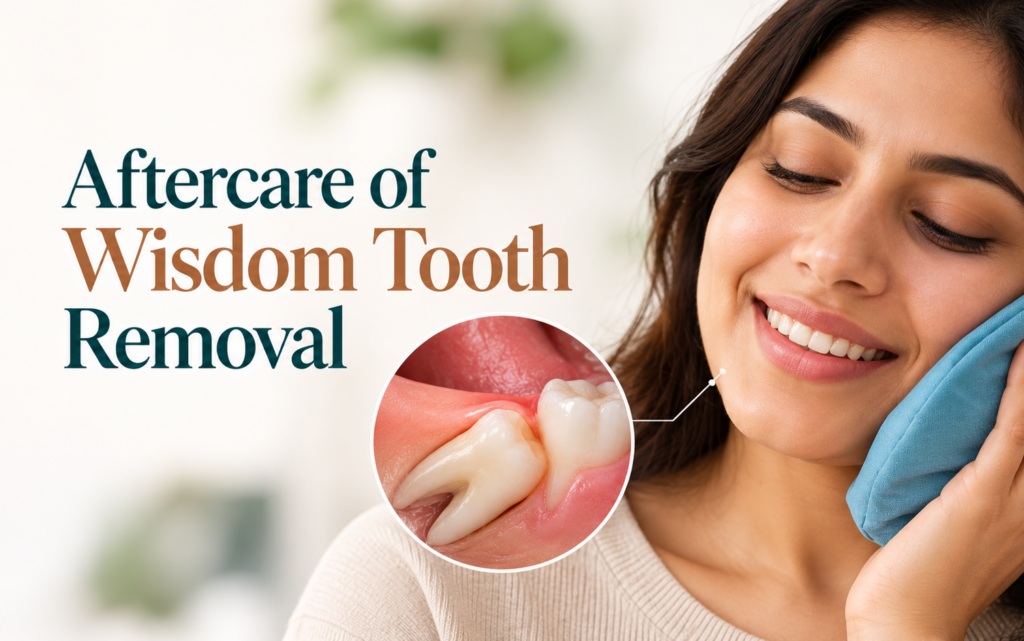
Have you recently had a wisdom tooth removed and want to know how to recover comfortably?
Proper aftercare after wisdom tooth removal helps protect the blood clot, reduce discomfort and support healing. Mild pain, swelling, jaw stiffness and slight bleeding can occur after extraction, especially when the wisdom tooth was impacted or required surgery.
Knowing what to eat, how to clean your mouth, which activities to avoid and when to contact your dentist can make your recovery easier.
If you’re searching for wisdom tooth removal aftercare instructions, this guide explains what to do during the first 24 hours, how to manage swelling, what foods to eat and which warning signs should not be ignored.
What Should You Do Immediately After Wisdom Tooth Removal?
The first 24 hours are particularly important because a blood clot forms in the extraction socket. This clot protects the underlying tissue and supports healing.
Follow these essential instructions:
- Bite on the gauze as directed: Apply steady pressure if your dentist has placed gauze to control bleeding.
- Rest: Avoid strenuous activity and allow your body time to recover.
- Use a cold compress: Apply an ice pack wrapped in a cloth to the outside of your cheek intermittently during the first day, following your dentist’s instructions.
- Avoid vigorous rinsing and spitting: These actions can disturb the blood clot.
- Avoid straws: Suction may dislodge the clot and increase the risk of dry socket.
- Take prescribed medication as directed: Follow your dentist’s instructions and do not exceed the recommended dose.
Avoid touching the extraction site with your fingers or tongue. If you had surgical extraction, follow the specific instructions provided by your dentist or oral surgeon.
What Can You Eat After Wisdom Tooth Removal?
Choose soft, nutritious foods that require minimal chewing, particularly during the first few days. Start eating when you are comfortable and the numbness has worn off sufficiently to avoid accidentally biting your cheek or tongue.
Foods to eat after wisdom tooth removal
Suitable options may include:
- Soft khichdi
- Well-cooked, soft rice
- Dal or smooth lentil soup
- Soft idli
- Mashed vegetables
- Scrambled eggs, if suitable for your diet
- Smooth, seedless fruit purées
- Soft pasta
- Cool or lukewarm soups
Choose foods that are easy to swallow and avoid chewing near the extraction site. If you have had several wisdom teeth removed, you may need a soft diet for longer.
Foods to avoid after wisdom tooth extraction
Avoid foods that can irritate the wound or become trapped in the socket, including:
- Chips, crackers and other crunchy foods
- Nuts, seeds and popcorn
- Hard or chewy meat
- Very spicy foods that irritate the area
- Very hot food and drinks during the initial recovery period
- Foods with small particles that are difficult to clear from the socket
Avoid alcohol during recovery, especially while taking medication that may interact with it.
How to Reduce Swelling After Wisdom Tooth Removal
Swelling of the cheek and jaw is common after wisdom tooth extraction, particularly following surgery for an impacted tooth.
Swelling may increase over the first two to three days before gradually improving.
To help manage it:
- Apply a cold compress to the outside of the cheek intermittently during the first 24–48 hours, as advised.
- Keep your head slightly elevated when resting.
- Avoid strenuous exercise during the initial recovery period.
- Take prescribed medication according to your dentist’s instructions.
After the initial period, your dentist may recommend a warm compress if jaw stiffness persists.
Contact your dentist if swelling continues to increase, becomes severe or is accompanied by fever or worsening pain. Rapidly increasing facial or neck swelling, particularly with difficulty swallowing or breathing, requires emergency medical assessment.
How to Brush Your Teeth After Wisdom Tooth Removal
Maintaining oral hygiene is important, but you must avoid disturbing the extraction site.
During the first 24 hours
Do not rinse vigorously, spit forcefully or brush directly over the fresh extraction wound. Follow your dentist’s instructions about cleaning your mouth on the day of surgery.
From the following day
You can generally resume gentle toothbrushing, taking care around the extraction site and any stitches.
Warm salt-water rinses may be started after the first 24 hours if your dentist has advised them. Dissolve approximately half a teaspoon of salt in a glass of warm water, gently bathe the area and let the liquid fall from your mouth without forceful spitting.
Repeat after meals as advised. Do not vigorously swish the solution.
If your dentist has prescribed a mouthwash or provided specific cleaning instructions for a surgical wound, follow that advice.
How Long Does It Take to Recover After Wisdom Tooth Removal?
Recovery depends on whether the tooth was fully erupted or impacted, the complexity of the extraction and your general health.
| Time after extraction | What you may experience |
|---|---|
| First 24 hours | Mild bleeding, tenderness and early swelling |
| Days 2–3 | Swelling and discomfort may be more noticeable |
| Days 4–7 | Symptoms should generally begin improving |
| 1–2 weeks | Many patients feel substantially better, although some tenderness or stiffness may remain |
These are general estimates, not a guaranteed recovery schedule. Deeper surgical wounds and jawbone healing take longer than the initial gum healing.
If your pain or swelling is getting worse rather than gradually improving, contact your dentist for an assessment.
Is Bleeding Normal After Wisdom Tooth Extraction?
A small amount of blood in your saliva or mild oozing during the initial period can be normal.
If active bleeding occurs, follow the instructions given by your dentist. Usually, you should place clean gauze over the site and bite down with firm, continuous pressure for the recommended period.
Avoid repeatedly removing the gauze to check the wound, as this can interrupt clot formation.
Contact your dentist urgently if bleeding remains heavy or does not stop with firm pressure. Seek emergency care if bleeding is excessive or you feel faint or unwell.
When Should You Contact Your Dentist After Wisdom Tooth Removal?
Some discomfort is expected, but certain symptoms require prompt assessment.
Contact your dentist if you experience:
- Severe pain or pain that worsens after initially improving
- Increasing swelling after the first few days
- Fever or feeling generally unwell
- Pus or a persistent unpleasant taste with worsening symptoms
- Persistent bleeding
- Difficulty opening your mouth that is worsening
- Numbness or tingling that persists beyond the expected anaesthetic recovery period or develops unexpectedly
Difficulty breathing or swallowing, or rapidly spreading swelling of the face or neck, requires emergency care.
Do not start antibiotics or change prescribed medication without professional advice. Antibiotics are not routinely required after every wisdom tooth extraction.
Wisdom Tooth Removal Aftercare in Madhapur, Hyderabad
Recovering after wisdom tooth extraction is usually manageable when you follow the right aftercare instructions and know when to seek help.
At COGNIDENT – Psychiatry | Dental Clinic, Madhapur, Hyderabad, Dr. Harshitha Garapati provides comprehensive dental care, including assessment of wisdom tooth concerns, extraction planning and guidance on post-treatment recovery.
If you’ve recently had a wisdom tooth removed and are experiencing persistent pain, swelling, bleeding or concerns about healing, arrange a dental review rather than trying to manage worsening symptoms at home.
If you’re looking for a dental clinic in Madhapur, Hitech City or Hyderabad for wisdom tooth assessment or post-extraction care, contact COGNIDENT to discuss your concerns.
Frequently Asked Questions About Wisdom Tooth Removal Aftercare
What should I avoid after wisdom tooth removal?
Avoid vigorous rinsing, forceful spitting, straws, smoking, vaping, alcohol, strenuous activity and hard or crunchy foods during the initial healing period.
Can I drink water after wisdom tooth extraction?
Yes. Drink water gently from a cup once you are able to swallow safely. Avoid using a straw during the initial healing period.
When can I rinse my mouth after wisdom tooth removal?
Avoid rinsing during the first 24 hours unless your dentist instructs otherwise. From the following day, gentle warm salt-water rinses may help keep the area clean.
Can I sleep on my side after wisdom tooth removal?
Rest in a comfortable position with your head slightly elevated, particularly during the first night. Avoid pressure on a swollen or painful cheek if it causes discomfort.
When can I return to work after wisdom tooth extraction?
Some patients can return to routine activities the next day, while others need several days off, particularly after complex surgical extraction or sedation. Avoid strenuous exercise until your dentist says it is appropriate.
How do I know if my wisdom tooth extraction is healing properly?
Pain and swelling should generally begin to improve after the first few days. You may still have some jaw stiffness or tenderness while the wound heals. Worsening pain, fever, increasing swelling or persistent bleeding should be assessed.
How long does the hole take to close after wisdom tooth removal?
The gum gradually heals over the extraction socket, but the visible opening may take several weeks to close fully. Bone healing takes longer. The timeline depends on the size of the socket and the complexity of the extraction.