Laser dentistry uses focused laser technology to perform selected dental and soft-tissue procedures with precision and controlled tissue management.
At Cognident Psychiatry and Dental Clinic in Madhapur, laser dental procedures are planned after a detailed clinical evaluation based on your oral condition, gum health, treatment needs, and overall dental health.
Laser technology may be used for gum reshaping, periodontal procedures, tongue-tie release, teeth whitening, sensitivity management, and selected oral soft-tissue treatments.
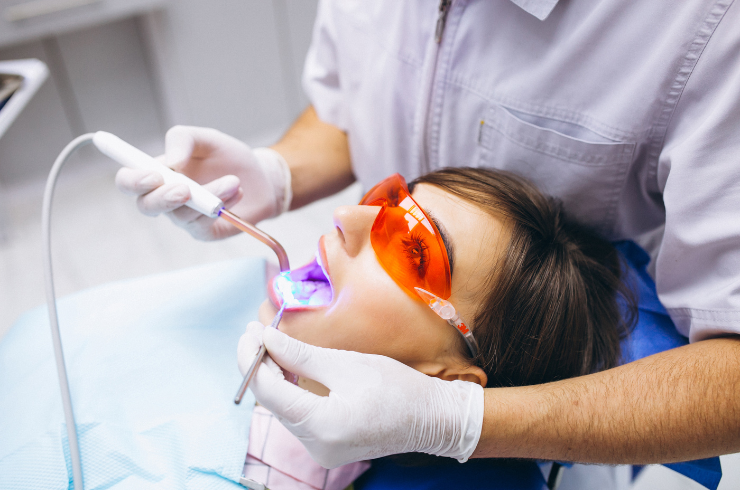
Laser dentistry helps dentists perform selected procedures with controlled precision and may support reduced bleeding, minimal tissue trauma, and improved patient comfort in suitable cases.
The treatment approach depends on the procedure required, clinical condition, and individual oral health needs.
Laser dentistry involves the use of dental lasers to treat or modify oral tissues during selected dental procedures.
Depending on the type of laser and clinical indication, it may be used on gum tissue, soft tissues, or as an additional tool in certain restorative and periodontal treatments.
Dental lasers allow dentists to target specific treatment areas with controlled energy for accurate tissue management.
Laser procedures may help minimise bleeding and reduce disturbance to surrounding tissues in suitable treatments.
Laser-assisted treatments may support patient comfort and recovery depending on the procedure performed.
Laser technology is used alongside clinical expertise. It supports dentist decisions but does not replace detailed examination and personalised treatment planning.
Laser dentistry may be suitable for patients who need:
Laser gum recontouring reshapes excess or uneven gum tissue to improve gum symmetry, tooth visibility, and smile appearance.
Laser frenectomy removes or modifies a restrictive frenum that may interfere with oral movement, spacing, speech, or dental function.
Laser treatment may be used to release a restrictive lingual frenulum in selected tongue-tie cases to improve tongue mobility.
LANAP is a laser-assisted periodontal procedure used in selected gum disease cases to target diseased tissue and support periodontal healing.
Laser-assisted flap procedures may help access and manage infected areas around teeth while preserving healthy surrounding tissue.
Laser gingival depigmentation helps reduce excessive dark pigmentation of gums and create a more uniform gum appearance.
Laser crown lengthening reshapes gum tissue to expose additional tooth structure for restorative or aesthetic purposes.
Laser therapy may help reduce tooth sensitivity associated with exposed tooth surfaces under professional supervision.
Laser-assisted teeth whitening uses laser technology as part of an in-clinic bleaching procedure to improve tooth brightness.
Low-level laser therapy may support pain relief and healing in selected cases of painful or recurrent oral ulcers.
Laser dentistry offers a precise and controlled approach for selected dental procedures. Potential advantages may vary depending on the treatment performed.
Recovery and treatment outcomes vary according to the procedure, oral health condition, medical history, and individual healing response.
At Cognident Psychiatry and Dental Clinic, laser dental treatments are customised according to each patient's clinical needs and oral health condition.
Our dental team combines modern laser technology with detailed evaluation and personalised treatment planning to provide comfortable and effective dental care.
With modern dental technology, comprehensive evaluation, and customised treatment planning, Cognident provides patient-focused laser dentistry in Madhapur.
Laser gum procedures are generally performed under local anaesthesia to keep the treatment area comfortable. Some patients may experience mild tenderness or sensitivity after treatment.
Recovery depends on the type and extent of the procedure. Many patients can return to routine activities soon after treatment, although complete healing may take longer.
Laser treatment may help manage infected gum tissue and reduce bacteria, but it is usually part of a complete gum care plan that may include professional cleaning, oral hygiene improvement, and follow-up care.
Yes. Laser gum contouring may be used to remove excessive gum tissue and create a more balanced gum line in suitable cases. The dentist evaluates tooth position, lip movement, and bone level before recommending treatment.
The results can be long-lasting when gum tissue is properly reshaped and good oral hygiene is maintained. Additional treatment may be required depending on gum condition, bone position, or the cause of excessive gum display.

Laser dentistry uses focused laser technology to perform selected dental and soft-tissue procedures with precision and controlled tissue management. It may be used for gum reshaping, periodontal procedures, tongue-tie release, teeth whitening, sensitivity management, and selected oral soft-tissue conditions.
At Cognident Psychiatry and Dental Clinic in Madhapur, laser dental procedures are planned after a detailed clinical evaluation. The treatment approach depends on the patient’s oral condition, gum health, treatment needs, and overall dental health.
Laser dentistry involves the use of dental lasers to treat or modify oral tissues during selected dental procedures. Depending on the type of laser and clinical indication, it may be used on gum tissue, other soft tissues, or as an adjunct in certain restorative and periodontal treatments.
Laser technology allows the dentist to work precisely in the required area and may help minimise bleeding and tissue trauma in suitable procedures. In some cases, it may also support improved patient comfort and recovery.
Laser dentistry may be suitable for patients who need:
The dentist examines your gums, teeth, bite, and supporting bone. Digital X-rays and gum measurements may be taken to understand the extent of the condition.
The treatment area is numbed, and the dental laser is used to remove, reshape, or disinfect the affected tissue with controlled precision.
Aftercare instructions are provided to support healing. Follow-up appointments help assess oral health and monitor the treatment outcome.
Laser gum recontouring helps reshape excess or uneven gum tissue to improve gum symmetry, tooth visibility, and overall smile appearance.
A laser frenectomy removes or modifies an restrictive frenum, which may interfere with oral movement, spacing, speech, or dental function.
Laser treatment may be used to release a restrictive lingual frenulum in selected cases of tongue-tie, helping improve tongue mobility.
LANAP is a laser-assisted periodontal procedure used in selected cases of gum disease to target diseased tissue and support periodontal healing as part of a comprehensive treatment plan.
Laser-assisted flap procedures may be used during periodontal treatment to access and manage infected areas around the teeth while preserving healthy surrounding tissue wherever possible.
Laser gingival depigmentation helps reduce excessive dark pigmentation of the gums and create a more uniform gum appearance in suitable patients.
Laser crown lengthening reshapes gum tissue to expose additional tooth structure when required for restorative treatment or aesthetic improvement.
Laser therapy may help reduce dentinal hypersensitivity associated with exposed tooth surfaces by treating sensitive areas under professional supervision.
Laser-assisted teeth whitening uses laser technology as part of an in-clinic bleaching procedure to improve the brightness of discoloured teeth.
Low-level laser therapy may be used to support pain relief and healing in selected cases of recurrent or painful oral ulcers.
Laser dentistry offers a precise and controlled approach for selected dental procedures. Depending on the treatment, potential advantages may include reduced bleeding, minimal disturbance to surrounding tissue, fewer sutures in certain procedures, improved treatment precision, and greater patient comfort.
Recovery and treatment outcomes vary according to the procedure, oral health, medical history, and individual healing response.
At Cognident Psychiatry and Dental Clinic, laser dental treatments are customised according to each patient’s clinical needs and oral health.
Our dental team provides a range of laser-assisted procedures, including gum recontouring, frenectomy, tongue-tie release, LANAP, laser flap surgery, gingival depigmentation, crown lengthening, laser desensitisation, laser bleaching, and low-level laser therapy for oral ulcers.
With modern dental technology, comprehensive evaluation, personalised treatment planning, and multiple dental services available under one roof, Cognident provides patient-focused laser dentistry in Madhapur.
Find answers to commonly asked questions about our dental services, treatments, appointments, and patient care to help you make informed decisions about your oral health.
Laser gum procedures are generally performed under local anaesthesia to keep the treatment area comfortable. Some patients may experience mild tenderness or sensitivity after treatment, which usually improves with proper aftercare.
Recovery depends on the type and extent of the procedure. Many patients can return to routine activities soon after treatment, although complete gum healing may take longer. The dentist will provide personalised dietary and oral hygiene instructions.
Laser treatment may help manage infected gum tissue and reduce bacteria, but it is usually part of a complete gum care plan. Professional cleaning, improved oral hygiene, regular follow-ups, and other periodontal procedures may also be required.
Yes. Laser gum contouring may be used to remove excessive gum tissue and create a more balanced gum line in suitable cases. The dentist will also evaluate tooth position, lip movement, and bone level before recommending treatment.
The results can be long-lasting when the gum tissue is properly reshaped and good oral hygiene is maintained. In some cases, additional treatment may be required depending on bone position, gum condition, or the cause of excessive gum display.