Many dental concerns develop beneath the gums or inside the jawbone and may not be visible during a routine oral examination.
At Cognident Psychiatry and Dental Clinic in Madhapur, we provide advanced digital dental imaging to support accurate diagnosis and personalised treatment planning.
A full-mouth X-ray helps dentists evaluate teeth, roots, surrounding bone, and supporting structures to identify hidden dental concerns.
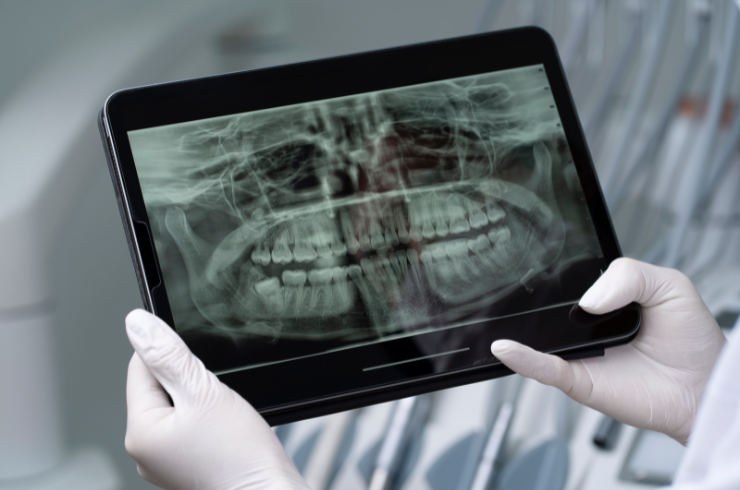
A full-mouth dental X-ray may be recommended for tooth pain, dental infections, wisdom teeth concerns, gum disease, orthodontic assessment, dental implants, or comprehensive oral evaluation.
The imaging process is quick, comfortable, and performed only when clinically required.
A full-mouth X-ray is a diagnostic dental imaging examination that provides a detailed view of teeth and surrounding oral structures.
Depending on clinical requirements, it may involve a series of individual dental X-rays or a panoramic dental X-ray that captures the upper jaw, lower jaw, teeth, and nearby structures in one image.
Provides detailed images of teeth, roots, jawbone, and supporting structures that may not be visible during routine examination.
Helps identify tooth infections, impacted wisdom teeth, developing problems, and conditions beneath the gums.
Supports planning for root canals, implants, braces, extractions, crowns, bridges, and rehabilitation procedures.
A full-mouth dental X-ray may help dentists evaluate tooth roots, jawbone support, developing teeth, impacted teeth, and infections that cannot be seen visually.
Your dentist may recommend full-mouth dental imaging when a comprehensive view of your oral health is required.
Digital full-mouth X-rays help dentists detect dental concerns that may not be visible during a routine oral examination.
Digital imaging allows dentists to enlarge images for closer evaluation, explain dental conditions more clearly, and monitor changes during future visits.
At Cognident Psychiatry and Dental Clinic, dental X-rays are recommended only when they provide meaningful diagnostic value.
Every image is assessed together with your symptoms, oral examination, dental history, and treatment requirements.
With modern technology, careful imaging protocols, strict hygiene standards, and patient-focused care, Cognident provides convenient dental X-ray services in Madhapur.
No. A dental X-ray is a non-invasive imaging procedure and does not cause pain. You may need to remain still or hold a small sensor in your mouth for certain types of dental images.
Digital dental X-rays use controlled radiation exposure and are recommended only when clinically necessary. Appropriate safety measures are followed according to patient requirements.
The imaging process usually takes only a few minutes. The exact duration depends on whether a panoramic image or a series of individual dental X-rays is required.
No special preparation is generally required. You may be asked to remove metal objects, removable dentures, jewellery, or spectacles that could interfere with the image.
Yes. Dental X-rays can help identify cavities between teeth, beneath fillings, or in areas that may not be clearly visible during a routine examination.
Inform the dentist if you are pregnant or think you may be pregnant. The dentist will determine whether the X-ray is necessary and recommend appropriate precautions based on your clinical condition.
Many dental concerns develop beneath the gums or inside the jawbone and may not be visible during a routine oral examination.
At Cognident Psychiatry and Dental Clinic in Madhapur, we provide advanced digital dental imaging to support accurate diagnosis and personalised treatment planning.
A full-mouth X-ray helps dentists evaluate teeth, roots, surrounding bone, and supporting structures to identify hidden dental concerns.
Learn More
A full-mouth dental X-ray may be recommended for tooth pain, dental infections, wisdom teeth concerns, gum disease, orthodontic assessment, dental implants, or comprehensive oral evaluation.
The imaging process is quick, comfortable, and performed only when clinically required.
A full-mouth X-ray is a diagnostic dental imaging examination that provides a detailed view of teeth and surrounding oral structures.
Depending on clinical requirements, it may involve a series of individual dental X-rays or a panoramic dental X-ray that captures the upper jaw, lower jaw, teeth, and nearby structures in one image.
Provides detailed images of teeth, roots, jawbone, and supporting structures that may not be visible during routine examination.
Helps identify tooth infections, impacted wisdom teeth, developing problems, and conditions beneath the gums.
Supports planning for root canals, implants, braces, extractions, crowns, bridges, and rehabilitation procedures.
A full-mouth dental X-ray may help dentists evaluate tooth roots, jawbone support, developing teeth, impacted teeth, and infections that cannot be seen visually.
Your dentist may recommend full-mouth dental imaging when a comprehensive view of your oral health is required.
Digital full-mouth X-rays help dentists detect dental concerns that may not be visible during a routine oral examination.
Digital imaging allows dentists to enlarge images for closer evaluation, explain dental conditions more clearly, and monitor changes during future visits.
At Cognident Psychiatry and Dental Clinic, dental X-rays are recommended only when they provide meaningful diagnostic value.
Every image is assessed together with your symptoms, oral examination, dental history, and treatment requirements.
With modern technology, careful imaging protocols, strict hygiene standards, and patient-focused care, Cognident provides convenient dental X-ray services in Madhapur.
No. A dental X-ray is a non-invasive imaging procedure and does not cause pain. You may need to remain still or hold a small sensor in your mouth for certain types of dental images.
Digital dental X-rays use controlled radiation exposure and are recommended only when clinically necessary. Appropriate safety measures are followed according to patient requirements.
The imaging process usually takes only a few minutes. The exact duration depends on whether a panoramic image or a series of individual dental X-rays is required.
No special preparation is generally required. You may be asked to remove metal objects, removable dentures, jewellery, or spectacles that could interfere with the image.
Yes. Dental X-rays can help identify cavities between teeth, beneath fillings, or in areas that may not be clearly visible during a routine examination.
Inform the dentist if you are pregnant or think you may be pregnant. The dentist will determine whether the X-ray is necessary and recommend appropriate precautions based on your clinical condition.
