Multiple damaged, missing, worn, or infected teeth can affect your ability to chew, speak, smile, and maintain good oral health.
At Cognident Psychiatry and Dental Clinic in Madhapur, we provide personalised full mouth rehabilitation to restore the health, appearance, strength, and function of your entire mouth.
Also known as full mouth reconstruction, this treatment combines multiple restorative, cosmetic, implant, and orthodontic procedures in a carefully planned sequence.
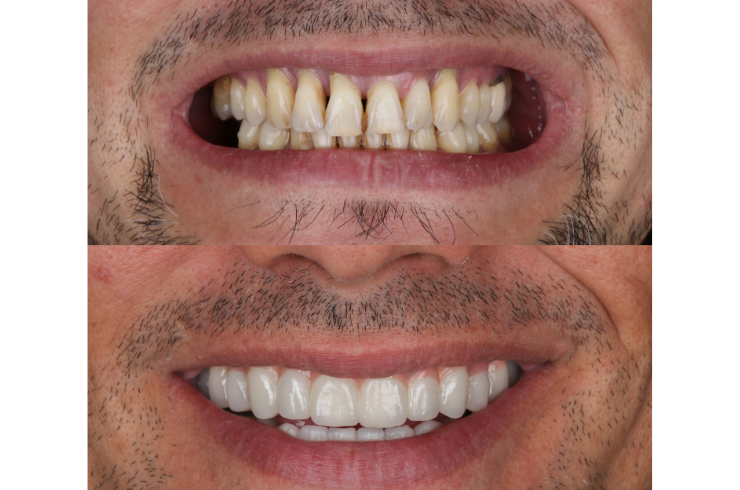
Our dental team uses modern diagnostic technology and customised treatment planning to address complex dental concerns while preserving natural teeth wherever possible.
Full mouth rehabilitation focuses on restoring comfortable chewing, proper bite balance, speech, smile appearance, and long-term dental stability.
Full mouth rehabilitation is a comprehensive dental treatment plan designed to restore or replace multiple teeth in the upper jaw, lower jaw, or both.
It may involve a combination of dental crowns, bridges, implants, root canal treatment, veneers, dentures, gum care, orthodontics, and bite correction.
The dentist evaluates tooth condition, gum health, jawbone support, bite alignment, chewing function, facial appearance, and overall oral health.
A customised treatment sequence is created based on oral health, functional needs, aesthetic goals, and treatment priorities.
Planned procedures restore chewing ability, bite balance, appearance, comfort, and long-term dental stability.
The goal of full mouth rehabilitation is not only to improve the smile but also to restore proper dental function and protect remaining natural teeth.
You may benefit from full mouth rehabilitation if you have:
The dentist evaluates your teeth, gums, bite, jawbone support, and facial profile to understand your complete oral condition.
A step-by-step treatment plan is created based on your oral health, functional needs, aesthetic goals, and treatment priorities.
Recommended procedures are completed in planned stages to restore comfort, appearance, chewing ability, and dental stability.
Depending on the condition of teeth, gums, jawbone, and remaining bone support, full mouth rehabilitation may include one or more treatment options.
Custom-made removable dentures used to replace all missing teeth in the upper jaw, lower jaw, or both. They help restore chewing, speech, facial support, and smile appearance.
Removable dentures supported and stabilised by dental implants, offering improved retention, comfort, and chewing efficiency compared with conventional dentures.
Fixed full-arch dental prosthesis supported by implants, providing improved stability and a more natural feel for patients with extensive tooth loss.
A full arch of fixed teeth supported by four strategically positioned dental implants to restore function and appearance in suitable cases.
Six dental implants support a fixed full-arch restoration, providing enhanced stability and support for complete tooth replacement.
Advanced implant options for selected patients with severe upper jaw bone loss where conventional implants may not be suitable.
The most appropriate treatment option is selected after evaluating bone availability, oral health, bite, medical history, functional requirements, and long-term treatment goals.
Full mouth rehabilitation restores multiple dental concerns through one coordinated treatment plan.
With personalised planning and regular dental care, full mouth rehabilitation can provide stable, functional, and long-lasting results.
At Cognident Psychiatry and Dental Clinic, every full mouth rehabilitation plan is designed around the patient's oral health, functional needs, comfort, and smile goals.
Our dental team provides comprehensive evaluation, digital treatment planning, implants, microscopic root canal treatment, crowns, bridges, cosmetic dentistry, orthodontic care, and gum treatments under one roof.
Our goal is to restore a healthy smile while improving dental function, comfort, confidence, and long-term oral wellbeing.
No. A smile makeover mainly focuses on cosmetic improvement, while full mouth rehabilitation addresses both appearance and dental function.
The treatment duration depends on the number and type of procedures required. Cases involving implants, bone grafting, orthodontics, or gum therapy may require several months.
Most procedures are performed under local anaesthesia and planned with patient comfort in mind. Mild temporary discomfort may occur after certain treatments.
Yes. Dental implants may be used to replace one, multiple, or all missing teeth. Implant-supported bridges, dentures, or full-arch restorations may be recommended depending on individual needs.
The longevity of full mouth rehabilitation depends on the procedures performed, quality of restorations, oral hygiene, gum health, diet, and regular dental care.

Multiple damaged, missing, worn, or infected teeth can affect your ability to chew, speak, smile, and maintain good oral health. These concerns may also lead to bite problems, jaw discomfort, facial changes, and reduced confidence.
At Cognident Psychiatry and Dental Clinic in Madhapur, we provide personalised full mouth rehabilitation to restore the health, appearance, strength, and function of your entire mouth. Also known as full mouth reconstruction, this treatment combines multiple restorative, cosmetic, implant, and orthodontic procedures in a carefully planned sequence.
Our dental team uses modern diagnostic technology and customised treatment planning to address complex dental concerns while preserving natural teeth wherever possible.
Full mouth rehabilitation is a comprehensive dental treatment plan designed to restore or replace multiple teeth in the upper jaw, lower jaw, or both. It may involve a combination of dental crowns, bridges, implants, root canal treatment, veneers, dentures, gum care, orthodontics, and bite correction.
The treatment is recommended when several dental problems are present at the same time and cannot be managed effectively with a single procedure.
During planning, the dentist evaluates tooth condition, gum health, jawbone support, bite alignment, chewing function, facial appearance, and overall oral health. Based on these findings, a personalised treatment sequence is created.
The goal of full mouth rehabilitation is not only to improve the smile but also to restore comfortable chewing, proper bite balance, speech, and long-term dental stability.
You may benefit from full mouth rehabilitation if you have:
The dentist examines your teeth, gums, bite, jawbone, and facial profile. Digital X-rays, scans, photographs, and impressions may be taken for detailed planning.
A step-by-step treatment plan is created based on your oral health, functional needs, aesthetic goals, treatment priority, and overall medical condition.
The recommended procedures are completed in planned stages. Final adjustments are made to improve chewing, bite balance, comfort, appearance, and long-term stability.
Depending on the condition of the teeth, gums, jawbone, and remaining bone support, full mouth rehabilitation may include one or more of the following treatment options:
Custom-made removable dentures used to replace all missing teeth in the upper jaw, lower jaw, or both, helping restore chewing, speech, facial support, and smile appearance.
Removable dentures that are supported and stabilised by dental implants. They offer better retention, comfort, and chewing efficiency compared with conventional dentures.
A fixed full-arch dental prosthesis supported by implants. Hybrid dentures provide improved stability and a more natural feel for patients who have lost most or all of their teeth.
A full arch of fixed teeth supported by four strategically positioned dental implants. This approach may help restore function and appearance while reducing the need for a larger number of implants in suitable patients.
Six dental implants are used to support a fixed full-arch restoration, providing enhanced support and stability for complete tooth replacement in appropriate cases.
Advanced implant options considered for patients with severe bone loss in the upper jaw. These implants utilise stronger areas of facial bone and may help provide fixed dental rehabilitation in selected cases where conventional implants are not suitable.
The most appropriate treatment option is selected after evaluating bone availability, oral health, bite, medical history, functional requirements, and long-term treatment goals.
Full mouth rehabilitation restores multiple dental concerns through one coordinated treatment plan. It can improve chewing and speech, replace missing teeth, strengthen weak or worn teeth, correct bite imbalance, and enhance the appearance of your smile.
By restoring proper tooth position and function, the treatment can also protect the remaining natural teeth, support facial structure, improve oral hygiene, and reduce discomfort caused by damaged teeth or an uneven bite.
With personalised planning and regular dental care, full mouth rehabilitation can provide stable, natural-looking, and long-lasting results.
At Cognident Psychiatry and Dental Clinic, every full mouth rehabilitation plan is designed around the patient’s oral health, functional needs, comfort, and smile goals.
Our dental team provides comprehensive evaluation, digital treatment planning, dental implants, microscopic root canal treatment, crowns, bridges, cosmetic dentistry, orthodontic care, and gum treatments under one roof.
Find answers to commonly asked questions about our dental services, treatments, appointments, and patient care to help you make informed decisions about your oral health.
No. A smile makeover mainly focuses on cosmetic improvement, while full mouth rehabilitation addresses both appearance and dental function.
The treatment duration depends on the number and type of procedures required. Some cases may be completed within a few appointments, while treatments involving implants, bone grafting, orthodontics, or gum therapy may take several months.
Most procedures are performed under local anaesthesia and planned with patient comfort in mind. Mild temporary discomfort may occur after certain treatments, but appropriate medication and aftercare guidance are provided.
Yes. Dental implants may be used to replace one, multiple, or all missing teeth. Implant-supported bridges, dentures, or full-arch restorations may be recommended depending on jawbone support and oral health.
The longevity of full mouth rehabilitation depends on the procedures performed, quality of restorations, oral hygiene, gum health, diet, and regular dental care.