Modern dental technology has transformed the way oral health conditions are diagnosed, planned, and treated. Digital dentistry improves accuracy, patient comfort, treatment efficiency, and communication through advanced digital tools.
At Cognident Psychiatry and Dental Clinic in Madhapur, we use digital dental technology to support personalised treatment planning across implants, root canals, crowns, bridges, braces, clear aligners, and smile designing.
Our team uses advanced technology to provide precise and predictable dental care based on your individual needs.
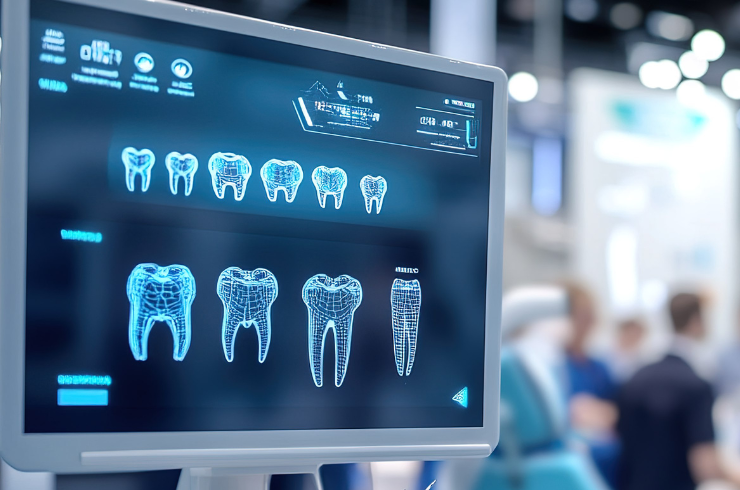
Depending on your dental needs, our team may use digital X-rays, intraoral scanning, three-dimensional imaging, digital impressions, computer-guided planning, and digital smile analysis.
Digital dentistry helps dentists understand dental conditions clearly, explain treatment options visually, and plan procedures with improved precision.
Digital dentistry refers to the use of computer-based technology during dental diagnosis, treatment planning, procedures, and restoration design.
It allows dentists to capture detailed information about teeth, gums, bite, and jaw without depending entirely on conventional impressions or manual techniques.
Digital X-rays, scans, and imaging technologies help dentists evaluate dental conditions with greater clarity and accuracy.
Advanced digital tools help plan procedures such as implants, orthodontics, smile designing, and restorations.
Digital technology supports accurate procedures, predictable outcomes, and improved patient communication.
Digital tools may include intraoral scanners, digital dental X-rays, three-dimensional imaging, CAD/CAM technology, digital smile design, microscopic visualisation, and computer-guided implant planning.
You may benefit from digital dentistry if you require:
The dentist examines your teeth, gums, bite, and dental concerns before selecting suitable digital diagnostic tools.
The collected digital information is analysed to understand tooth position, bone support, bite, and treatment requirements.
The planned dental procedure is performed using suitable digital guidance and advanced technology.
Digital dentistry can improve the accuracy, comfort, and efficiency of many dental procedures.
The benefits of digital dentistry may vary depending on the technology used and the complexity of the dental treatment. Digital tools support clinical decisions but do not replace a detailed dental examination.
At Cognident Psychiatry and Dental Clinic, we combine advanced dental technology with personalised and ethical clinical care.
Digital tools help our dentists evaluate dental concerns carefully and create treatment plans based on each patient's oral health, functional needs, and aesthetic goals.
At Cognident, our aim is to make dental care more precise, comfortable, transparent, and patient-focused by combining modern technology with clinical expertise.
Yes. Digital dental technologies are generally safe when used by qualified dental professionals. Digital X-rays typically use controlled radiation exposure, while intraoral scanners and digital photographs do not involve radiation.
An intraoral scanner is a small handheld device used to capture detailed digital images of teeth and gums. It creates a three-dimensional model that may be used for crowns, bridges, clear aligners, implants, and smile planning.
Many patients find digital impressions more comfortable than conventional moulding materials. The scanner captures the shape of teeth without placing a large impression tray inside the mouth.
Digital scans and three-dimensional imaging help dentists evaluate bone availability, nearby structures, and planned implant position. Computer-guided planning may improve accuracy and safety of implant placement in suitable cases.
Yes. Digital smile design helps evaluate tooth shape, shade, alignment, gum level, facial proportions, and smile balance. It allows dentists to create personalised cosmetic treatment plans and explain expected changes more clearly.
