Missing teeth can affect your smile, speech, chewing ability, and confidence. They may also cause nearby teeth to shift and gradually affect the supporting jawbone.
At Cognident Psychiatry and Dental Clinic in Madhapur, we provide advanced dental implant treatment to replace missing teeth with strong, natural-looking, and long-lasting restorations.
Dental implants are designed to closely match the appearance and function of natural teeth, helping patients eat, speak, and smile comfortably.
Our dental team uses modern diagnostic technology and personalised treatment planning to provide implant solutions for a single missing tooth, multiple missing teeth, or complete tooth loss.
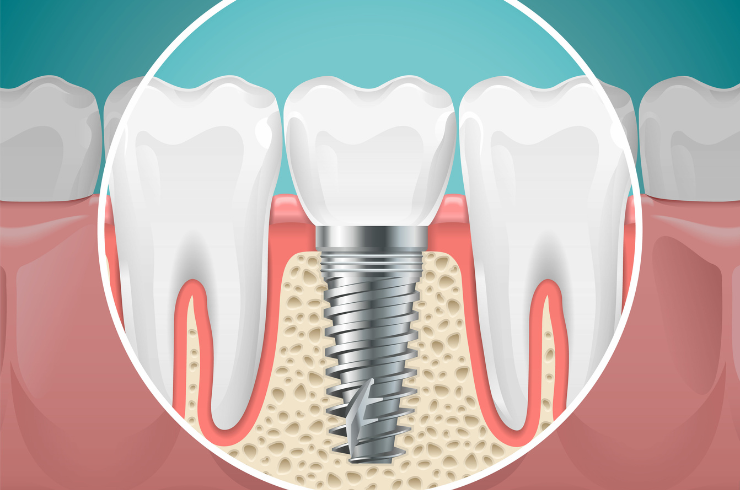
Dental implants are artificial tooth roots, usually made of biocompatible titanium, that are surgically placed into the jawbone. Once the implant integrates with the bone, it supports a dental crown, bridge, or fixed full-arch restoration.
A titanium component placed inside the jawbone that acts as an artificial tooth root.
A connector that joins the implant with the final dental restoration.
A customised restoration that replaces the visible part of the missing tooth.
Unlike removable dentures, dental implants remain securely positioned and provide improved stability while eating and speaking. They also help preserve the surrounding bone and avoid altering healthy neighbouring teeth in many cases.
You may benefit from dental implants if you have:
The dentist examines your teeth, gums, bite, and jawbone. Digital X-rays or 3D scans may be used to evaluate bone availability and plan implant placement.
The dental implant is carefully placed into the jawbone under local anaesthesia and allowed to heal while integrating with the surrounding bone.
After healing, a customised crown, bridge, or full-arch restoration is attached to restore appearance and comfortable bite.
The recommended solution depends on your oral health, bone condition, number of missing teeth, bite, and long-term expectations.
Dental implants offer several functional and cosmetic advantages when compared with conventional tooth-replacement options.
The lifespan of a dental implant depends on oral hygiene, gum health, general health, lifestyle habits, implant position, and regular dental follow-ups.
At Cognident Psychiatry and Dental Clinic, implant treatment is carefully planned to restore both the appearance and function of your smile. Our dentists evaluate your complete oral condition before recommending the most appropriate tooth-replacement option.
Dental implant placement is usually performed under local anaesthesia, which numbs the treatment area. Most patients experience minimal discomfort during the procedure.
The treatment duration depends on the number of implants, jawbone condition, healing response, and whether bone grafting is required.
Immediate implant placement may be possible in selected cases when there is sufficient healthy bone and no uncontrolled infection.
Dental implants can last for many years with good oral hygiene, healthy gums, regular dental check-ups, and proper maintenance.
Dental implants should be cleaned like natural teeth through regular brushing, flossing, or dentist-recommended interdental cleaning. Routine dental visits are important to monitor the implant, gums, bite, and surrounding bone.
