Damaged or missing teeth can affect your smile, chewing ability, speech, and overall oral health. A weakened tooth may fracture further, while gaps from missing teeth can disturb the natural bite.
At Cognident Psychiatry and Dental Clinic in Madhapur, we provide customised dental crowns and bridges to restore damaged teeth and replace missing teeth.
Our restorations are designed to improve strength, function, appearance, and bite balance while blending naturally with your smile.
Using digital dental technology, high-quality materials, and personalised treatment planning, our dental team provides comfortable and long-lasting restorative dental care.
Each restoration is carefully designed according to your tooth condition, bite, aesthetic requirements, and overall oral health.
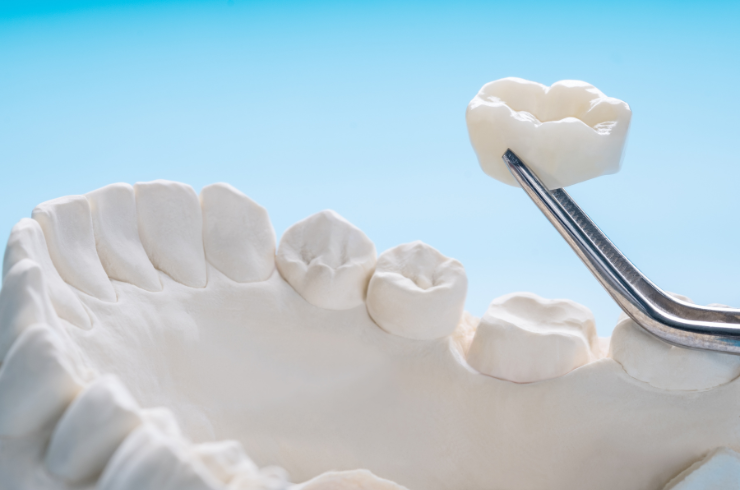
A dental crown is a customised cap placed over a damaged, weakened, or heavily restored tooth. It covers the visible portion of the tooth and helps restore natural shape, strength, colour, and function.
A dental bridge is a fixed restoration used to replace one or more missing teeth. It usually consists of an artificial tooth supported by neighbouring teeth or dental implants.
A protective restoration that strengthens damaged teeth and restores their appearance, shape, and chewing function.
A fixed replacement option that fills gaps caused by missing teeth and helps restore bite and smile balance.
Customised crowns and bridges are designed to match surrounding teeth for a balanced and natural appearance.
Unlike removable dentures, crowns and bridges remain fixed in the mouth and are carefully designed to match tooth size, shape, and shade.
You may benefit from dental crowns and bridges if you have:
The choice of restoration depends on tooth location, bite pressure, aesthetic expectations, oral health, and available tooth or bone support.
Strong and highly aesthetic restorations known for durability and natural appearance. Commonly used for both front and back teeth.
Provide excellent aesthetic results with tooth-like appearance and are often selected for visible areas of the smile.
Combine the strength of metal with the appearance of porcelain for functional and aesthetic restoration.
Strong restorations that may be recommended for teeth exposed to high chewing pressure.
Crowns placed over dental implants to replace missing teeth and restore chewing function.
Fixed restorations used to replace one or more missing teeth using neighbouring teeth or dental implants for support.
Zirconia and ceramic restorations are often preferred for their natural appearance, while stronger materials may be recommended for back teeth exposed to greater chewing pressure. Your dentist will recommend the most suitable option after evaluation.
Dental crowns and bridges restore damaged or missing teeth while improving strength, function, appearance, and bite balance.
When properly planned and maintained, crowns and bridges can provide durable, comfortable, and natural-looking dental restoration.
At Cognident Psychiatry and Dental Clinic, every crown and bridge is planned according to the condition of your teeth, gums, bite, and overall smile.
Our dental team uses digital imaging and modern scanning technology to support accurate treatment planning and comfortable impressions.
Our focus is on preserving healthy tooth structure, ensuring a comfortable bite, and providing restorations that look natural and function effectively.
Patients receive clear information about materials, treatment stages, expected results, maintenance, and alternatives before treatment begins.
A dental crown covers and protects an existing damaged tooth or dental implant. A dental bridge replaces one or more missing teeth and is supported by neighbouring teeth or dental implants.
The procedure is generally performed under local anaesthesia to keep the treatment area comfortable. Mild sensitivity or tenderness may occur temporarily after tooth preparation or final placement.
Crowns and bridges can remain functional for several years with proper oral hygiene and routine dental care. Their lifespan depends on restoration material, bite pressure, gum health, diet, teeth-grinding habits, and maintenance.
The most suitable material depends on tooth location, chewing pressure, aesthetic requirements, and remaining tooth structure. Zirconia and ceramic crowns are commonly preferred for strength and natural appearance, but the dentist will recommend the best option after evaluation.
Brush twice daily, clean around and beneath the restoration as advised, and attend regular dental check-ups. Special floss, interdental brushes, or a water flosser may be recommended for cleaning beneath a dental bridge.
