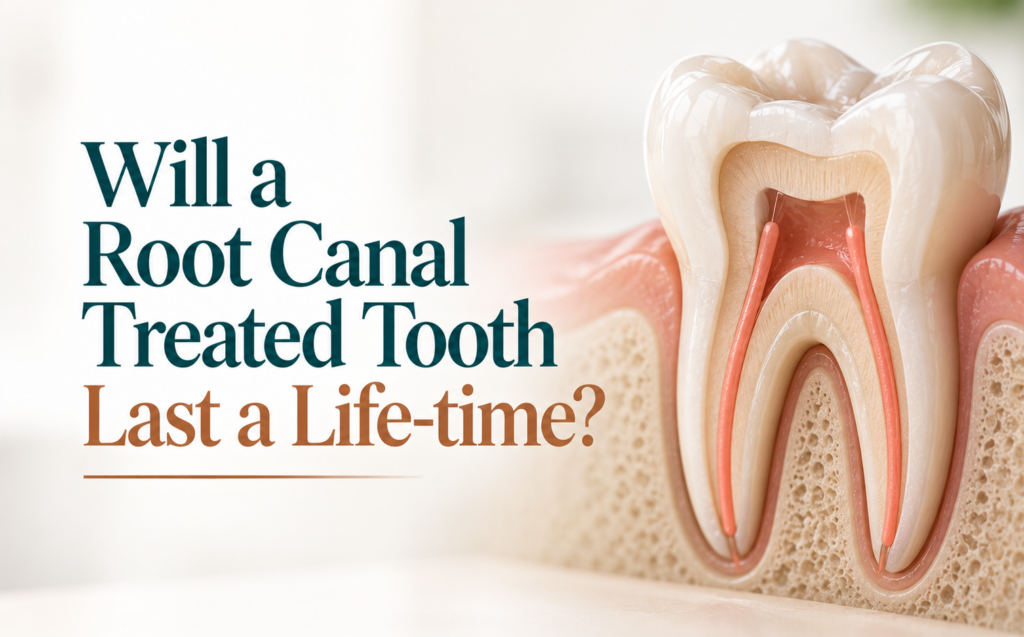
Can a root canal treated tooth last a lifetime? Yes. With proper root canal treatment, a suitable permanent restoration and regular dental care, a treated tooth can last for decades and may last a lifetime. However, no dentist can guarantee that every root canal treated tooth will last forever.
The long-term success of root canal treatment depends on several factors, including how much natural tooth structure remains, whether the tooth is protected with a suitable crown or filling, the quality of the root canal treatment and your oral hygiene habits.
If you have undergone root canal treatment or are considering it, understanding these factors can help you protect your natural tooth for as long as possible.
How Long Does a Root Canal Treated Tooth Last?
A root canal treated tooth can last as long as a natural tooth when it is properly treated, restored and maintained. Some treated teeth remain functional for a lifetime, while others may develop complications after several years.
The important thing to understand is that root canal treatment does not automatically mean that a tooth will eventually fail or need extraction. It is a procedure designed to remove infection or inflamed tissue from inside the tooth and preserve the remaining natural tooth structure.
According to the American Association of Endodontists, most teeth that have undergone root canal treatment can last a lifetime with proper care.
The final outcome depends on the condition of the tooth before treatment, the restoration placed afterward and how well the tooth is maintained.
7 Factors That Determine How Long a Root Canal Treated Tooth Lasts
1. How Much Natural Tooth Structure Remains
One of the most important factors affecting the lifespan of a root canal treated tooth is how much healthy tooth structure remains.
A tooth with substantial natural structure remaining may be easier to restore and protect. However, a tooth with extensive decay, large old fillings or fractures may be more vulnerable to breaking.
Even when the root canal treatment is successful, the tooth can still fracture if its remaining structure cannot withstand normal chewing forces.
This is why your dentist evaluates the amount and condition of the remaining tooth before deciding whether a filling, an onlay or a dental crown is appropriate.
2. Whether a Dental Crown Is Placed When Needed
Does a root canal treated tooth need a crown? In many cases, yes—particularly for molars and premolars that experience significant chewing forces.
A dental crown covers and protects the remaining tooth structure. It can help reduce the risk of fracture and restore the tooth’s shape and function.
A crown is often recommended when:
- A large amount of tooth structure has been lost due to decay.
- The tooth has a large existing filling.
- The tooth is a back tooth exposed to substantial chewing forces.
- The remaining cusps are weakened or at risk of fracture.
Not every root canal treated tooth automatically requires a full crown. Some front teeth with sufficient healthy structure may be restored successfully with a bonded filling or another suitable restoration.
The decision should be based on the tooth’s location, remaining structure, cracks, bite and overall clinical condition.
3. The Quality of the Root Canal Treatment
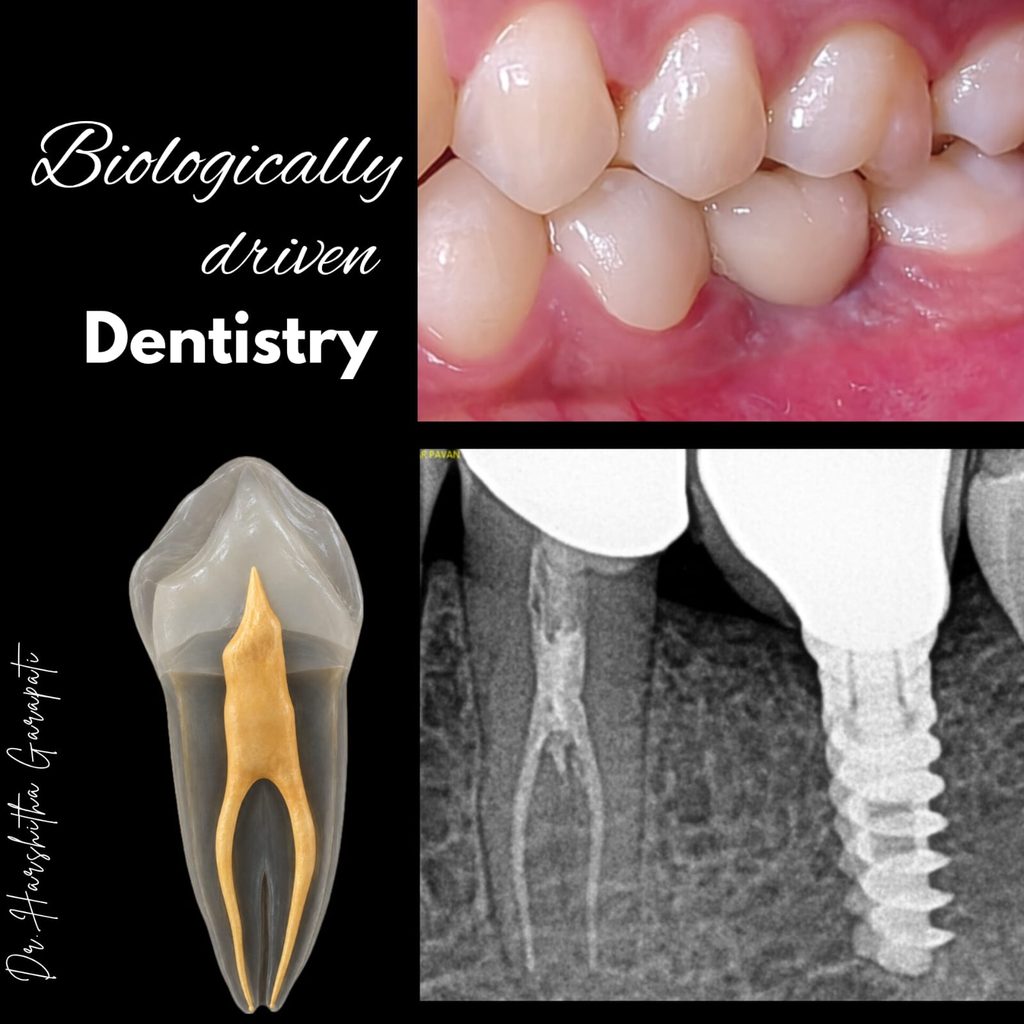
Mircoscopically done root canal treatment by
Dr. Harshitha Garapati
Successful root canal treatment involves locating, cleaning, disinfecting, shaping and sealing the root canal system appropriately.
Some teeth have complex anatomy, narrow canals or curved roots that can make treatment more challenging. If parts of the canal system remain infected or bacteria enter again, the tooth may not heal as expected.
A well-planned treatment, appropriate infection control and a reliable seal are important for long-term success.
In complex cases, treatment by an endodontist—a dentist with advanced training in root canal treatment—may be beneficial.
4. How Quickly the Tooth Is Permanently Restored
After root canal treatment, the tooth may initially have a temporary filling. This is not intended to serve as a permanent restoration indefinitely.
Delaying the final filling or crown can increase the risk of tooth fracture and reinfection, especially if the tooth has extensive structural damage.
Follow your dentist’s instructions regarding the timing of the permanent restoration. Until the tooth has been adequately restored, avoid biting hard foods with it.
5. Your Oral Hygiene and Gum Health
A root canal treated tooth can develop new decay around its filling or crown. If decay allows bacteria to enter the tooth again, further treatment may become necessary.
To protect your treated tooth:
- Brush twice daily with fluoride toothpaste.
- Clean between your teeth every day.
- Keep your gums healthy.
- Limit frequent sugary snacks and drinks.
- Attend regular dental check-ups and professional cleaning when recommended.
Good oral hygiene protects not only the treated tooth but also the surrounding gums and neighbouring teeth.
6. Your Bite and Chewing Habits
Teeth that experience excessive biting forces may be more susceptible to cracks and fractures.
Habits such as grinding or clenching your teeth, chewing ice, biting hard objects or using your teeth to open packaging can damage both natural teeth and dental restorations.
If you grind your teeth, your dentist may recommend a protective night guard. If your bite feels uneven after a crown or filling, arrange an assessment rather than continuing to chew uncomfortably.
7. Regular Follow-Up and Early Detection of Problems
A root canal treated tooth should continue to be monitored even if it feels completely normal.
Dental reviews allow your dentist to check the restoration, surrounding gums and, when clinically indicated, the healing of the tissues around the root.
Early assessment can help identify recurrent decay, a loose crown, cracks or persistent infection before the problem becomes more difficult to manage.
Why Does a Root Canal Treated Tooth Sometimes Fail?
Root canal treatment has a high success rate, but complications can occur months or even years later.
Common reasons include:
- Persistent infection: Bacteria may remain in complex or untreated parts of the root canal system.
- Reinfection: A leaking filling, damaged crown or new decay can allow bacteria to enter the tooth.
- Tooth fracture: Extensive structural loss, cracks or excessive biting forces may cause the tooth to break.
- Delayed restoration: Leaving a vulnerable tooth without adequate permanent protection can increase the risk of fracture or contamination.
- New dental problems: Trauma or decay can affect a previously treated tooth even after successful healing.
A failed or reinfected root canal does not always mean the tooth must be extracted. Depending on the cause and the amount of healthy tooth structure remaining, options may include root canal retreatment, endodontic surgery or a new restoration.
Extraction may be necessary if the tooth is too badly fractured or cannot be predictably restored.
How Can You Make Your Root Canal Treated Tooth Last Longer?
Follow these practical steps to protect your treated tooth:
- Complete the permanent restoration on time. Do not leave a temporary filling in place longer than advised.
- Get a crown when clinically indicated. This is particularly important for many back teeth with significant structural loss.
- Maintain excellent oral hygiene. Brush twice a day and clean between your teeth daily.
- Avoid excessive biting forces. Do not chew ice or hard objects, and seek advice if you grind or clench your teeth.
- Attend regular dental reviews. The frequency of visits depends on your oral health and your dentist’s recommendations.
- Get persistent symptoms checked. Do not ignore recurring pain, swelling, tenderness or a damaged restoration.
These measures cannot guarantee a lifetime of trouble-free function, but they can help reduce avoidable risks and support the long-term survival of your tooth.
Root Canal Treatment in Madhapur, Hyderabad
Have you had a root canal and want to know whether your tooth will last for years to come? Or has your dentist recommended a crown after root canal treatment?
At COGNIDENT – Psychiatry | Dental Clinic, Madhapur, Hyderabad, we focus on preserving natural teeth through careful diagnosis, appropriate root canal treatment and restorative planning.
Dr. Harshitha Garapati, MDS in Conservative Dentistry and Endodontics, provides experienced endodontic and restorative dental care, including microscopic root canal treatment, assessment of previously treated teeth, and planning for suitable fillings and crowns.
If you are searching for a root canal specialist in Madhapur, microscopic root canal treatment in Hitech City, or an endodontist in Hyderabad, a clinical evaluation can help determine the condition of your tooth and the best way to protect it. Refer to the cost of root canal treatment in Madhapur
Book a consultation at COGNIDENT to discuss your tooth’s long-term prognosis and the restoration it may need.
Frequently Asked Questions
1. Can a root canal treated tooth last a lifetime?
Yes. Many root canal treated teeth can last a lifetime with appropriate treatment, a suitable permanent restoration, good oral hygiene and regular dental reviews. However, lifetime survival cannot be guaranteed for every tooth.
2. How many years does a root canal treated tooth last?
There is no fixed number of years. A properly treated and restored tooth may function for decades or a lifetime, while a tooth with extensive damage, recurrent decay or fracture may need additional treatment sooner.
3. What happens if I do not get a crown after a root canal?
If your tooth needs a crown for protection and you delay or avoid it, the remaining tooth structure may be more likely to fracture. Whether a crown is necessary depends on the tooth’s location, the amount of remaining structure and other clinical factors.
4. Can a root canal treated tooth break after many years?
Yes. A tooth can fracture years after root canal treatment, especially if it has extensive structural loss, an inadequate restoration or excessive biting forces. A crown can reduce fracture risk when appropriately indicated, but it cannot eliminate all risk.
5. Can a root canal treated tooth get infected after 5 or 10 years?
Yes. New decay, a damaged or leaking restoration, or persistent infection can cause problems years after treatment. A dental examination and, when indicated, an X-ray can help identify the cause.
6. Does a root canal treated tooth need regular check-ups if there is no pain?
Yes. A tooth may develop problems without causing obvious symptoms. Regular dental reviews help monitor the restoration, gums and healing around the root.
7. Can a failed root canal be treated again?
Often, yes. Depending on the cause of failure and whether the tooth can be restored, root canal retreatment or endodontic surgery may help preserve it. Your dentist will assess whether these options are appropriate.
8. Is it better to extract a root canal treated tooth if it may fail in the future?
Not necessarily. If the tooth can be predictably treated and restored, preserving it may be preferable to extraction. The decision should be based on the tooth’s current condition, prognosis and available alternatives—not simply the possibility of future complications.