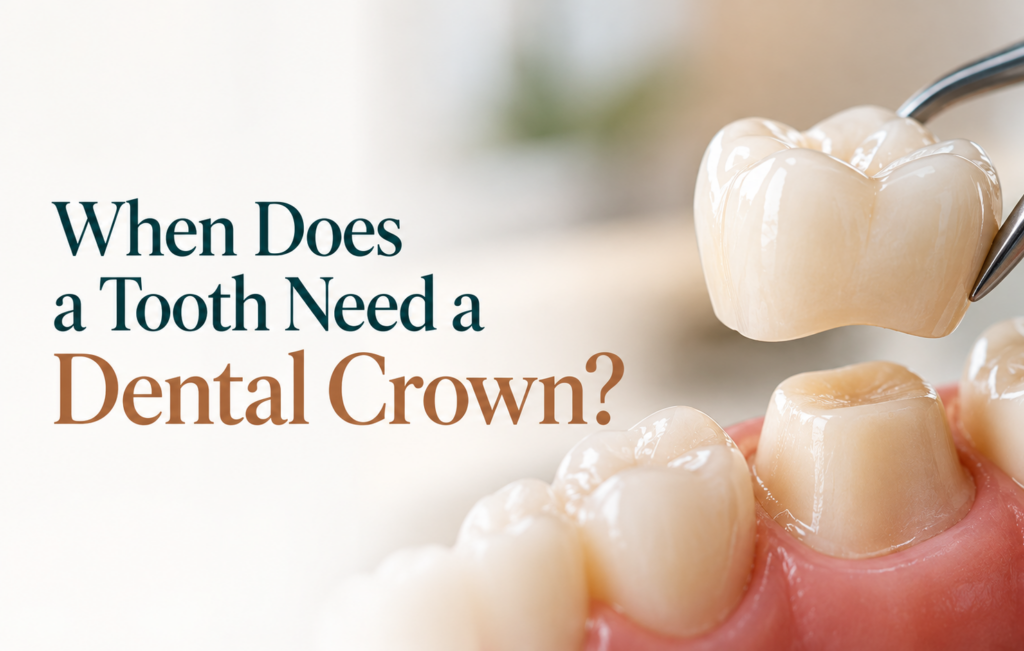
A dental crown is one of the most common treatments used to restore a weak, damaged or heavily restored tooth. But how do you know when a tooth actually needs a crown?
A filling may be enough for a small cavity, while a severely weakened tooth may need the additional protection of a crown. In some situations, an onlay, bonding or another restoration may be more appropriate.
The decision depends on how much healthy tooth structure remains, the location of the tooth, your bite and the type of damage.
Here are 6 common signs that a dental crown may be recommended.
What Is a Dental Crown?
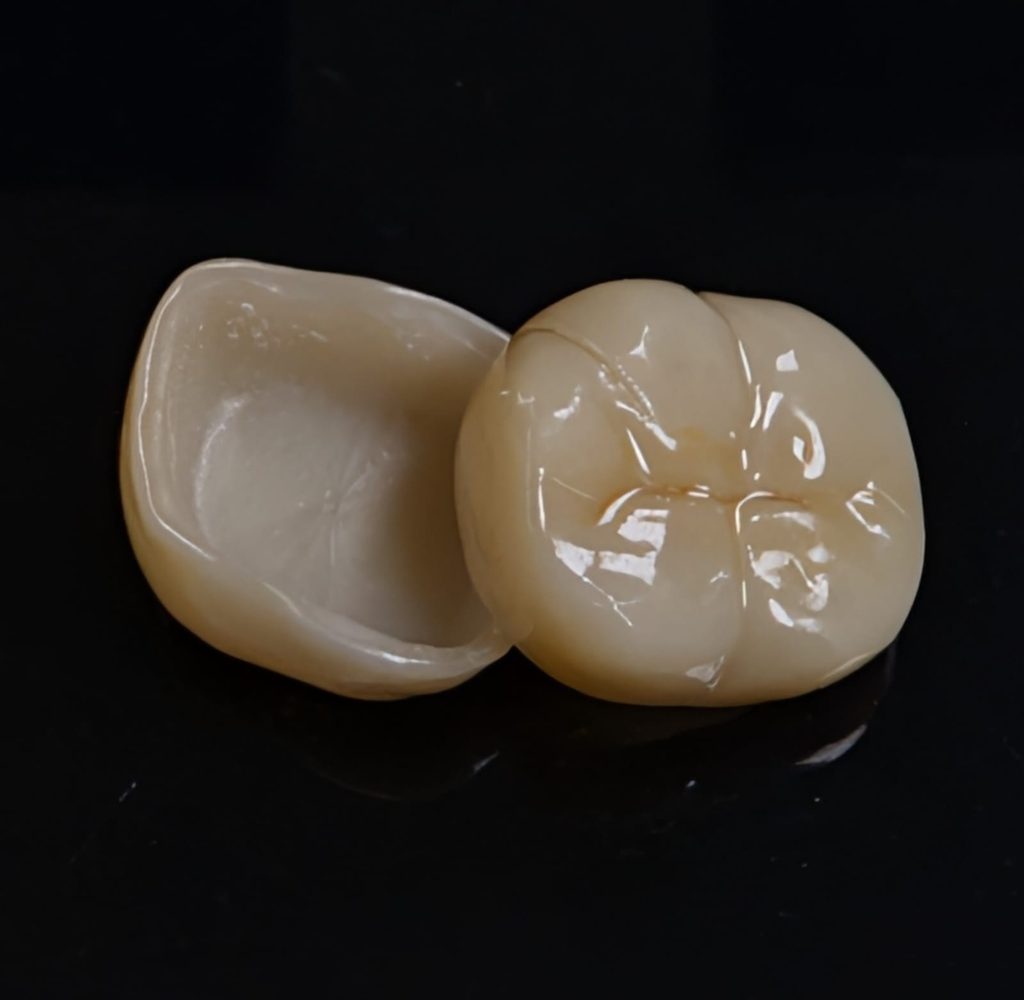
A dental crown is a custom-made restoration that fits over the visible portion of a tooth. It can restore the tooth’s shape, strength, function and appearance.
Crowns are commonly used for teeth that are significantly weakened by decay, fractures, large fillings, wear or root canal treatment. They can also be used to restore dental implants and support certain dental bridges.
1. A Large Cavity Has Weakened the Tooth
Not every cavity needs a crown.
Small and moderate cavities can often be restored with a filling. However, when decay has destroyed a substantial amount of tooth structure, there may not be enough strong tooth remaining to support a conventional filling.
In these situations, a dental crown may help restore and protect the remaining tooth.
The size and location of the cavity, the amount of remaining tooth structure and the forces placed on the tooth all influence the choice of restoration.
Can a large cavity be treated with a filling instead of a crown?
Sometimes, yes. If enough healthy tooth structure remains, a filling or an indirect restoration such as an inlay or onlay may be possible.
Your dentist will assess the tooth before deciding whether a crown is necessary.
2. The Tooth Is Cracked or Fractured
A cracked tooth can become progressively weaker, particularly when chewing forces continue to act on the crack.
Depending on the location and severity of the crack, treatment may include bonding, an onlay, a crown or root canal treatment. Some cracks may extend too deeply to save the tooth, making extraction necessary.
A crown may be recommended when the remaining tooth structure can be predictably protected.
If you notice sharp pain when biting, temperature sensitivity or a visible crack, don’t wait for the tooth to break further. Early assessment can help determine whether the tooth can be preserved.
3. You Have Had a Root Canal Treatment
A tooth that has undergone root canal treatment may require additional protection, particularly when significant tooth structure has been lost.
After root canal treatment, the tooth is restored to seal and protect it. For many teeth—especially posterior teeth exposed to substantial chewing forces—a crown may be recommended to reduce the risk of fracture.
The exact restoration depends on the amount of remaining tooth structure and the tooth’s location and function.
If you’ve had a root canal but still have a temporary filling, ask your dentist when the definitive restoration should be completed.
4. A Large Old Filling Has Left the Tooth Weak
A tooth with a very large filling may have relatively little natural tooth structure remaining around it.
Over time, the tooth may become vulnerable to cracking or fracture under normal biting forces.
A crown can sometimes be used to cover and reinforce the remaining tooth structure, particularly when there is insufficient tooth structure to support another filling.
This does not mean that every tooth with an old filling automatically needs a crown. The condition of the tooth needs to be evaluated first.
5. The Tooth Is Severely Worn Down
Teeth can gradually lose structure because of bruxism (teeth grinding), acid erosion, an uneven bite or other causes of tooth wear.
When substantial tooth structure has been lost, treatment may be needed to restore the tooth’s function and protect what remains.
Depending on the severity, treatment may involve bonding, onlays, crowns or a more comprehensive rehabilitation plan.
Importantly, the cause of tooth wear should also be identified and managed. Simply restoring worn teeth without addressing ongoing grinding or erosion may not provide a predictable long-term result.
6. The Tooth Needs Major Structural or Cosmetic Restoration
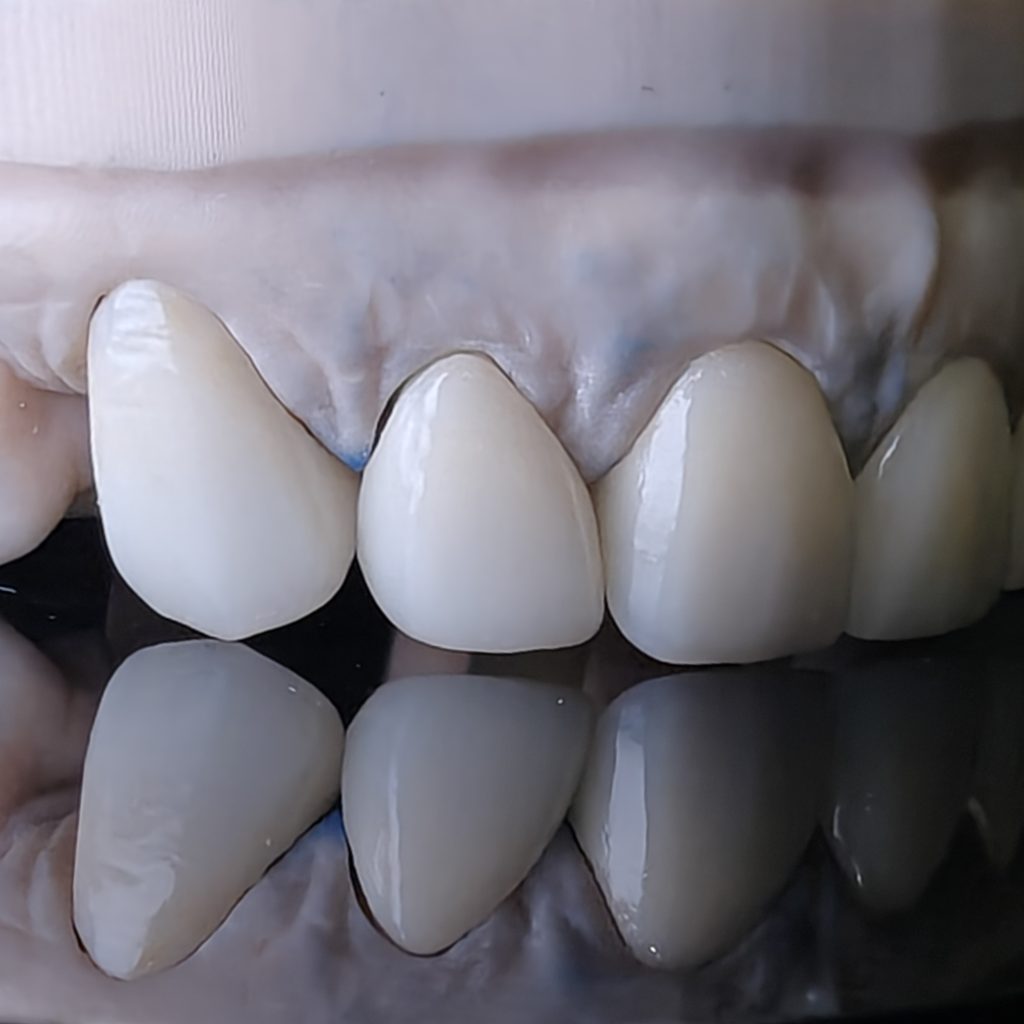
Crowns aren’t used only for emergencies.
A severely discoloured, misshapen or structurally compromised tooth may sometimes be restored with a crown when a more conservative option is not suitable.
However, if the tooth is healthy and the concern is purely cosmetic, a crown may not be the first choice.
Depending on the situation, options such as professional teeth whitening, composite bonding or veneers may preserve more natural tooth structure.
This is why a crown should be recommended based on the condition and needs of the tooth—not simply because it can improve its appearance.
Dental crowns in Madhapur, Hyderabad
If you’re wondering “Do I need a dental crown?”, the answer cannot be determined from symptoms alone.
At COGNIDENT – Psychiatry | Dental Clinic, Madhapur, Hyderabad, our lead specialist Dr. Harshitha Garapati will evaluate the tooth’s remaining structure, cracks, existing restorations, bite and overall dental health before recommending a crown.
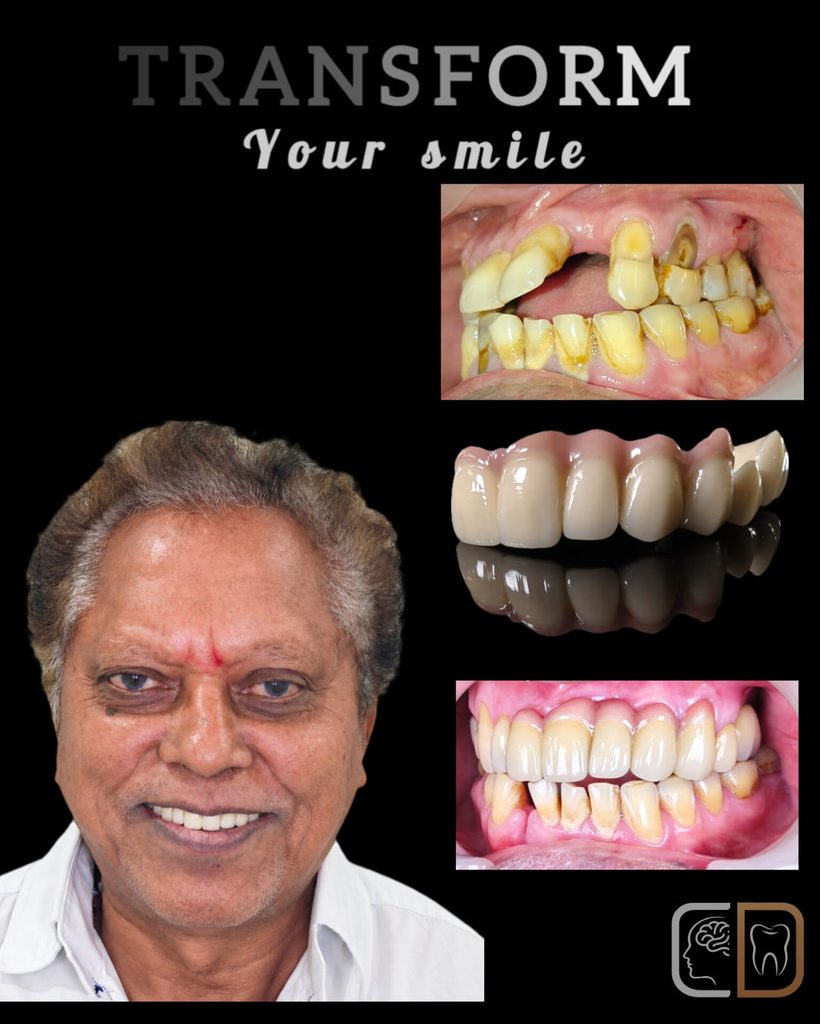
SMILE TRANSFORMATION OF A 60 YEAR ADULT, RESTORING FUNCTION, ESTHETICS AND CONFIDENCE AT COGNIDENT
Our restorative dental care includes tooth-coloured crowns, zirconia crowns, root canal treatment, microscopic root canal treatment and comprehensive restorative treatment planning.
If you’re looking for a dentist in Madhapur, dental bridges treatment in Hyderabad, zirconia crowns in Hyderabad or an endodontist in Madhapur, a detailed examination can help determine whether a crown—or a more conservative alternative—is right for your tooth.
Frequently Asked Questions
How do I know if I need a dental crown?
A crown may be recommended if a tooth is significantly weakened by decay, a large filling, a crack, fracture, extensive wear or root canal treatment. Your dentist needs to examine the tooth to determine whether a crown is necessary.
Is a crown better than a filling?
Not always. A filling is usually preferred when enough healthy tooth structure remains. A crown may be more appropriate when the tooth has lost substantial structure and needs additional protection.
Does a root canal always require a crown?
No. The need depends on the tooth, the amount of remaining structure and the forces placed on it. Many root-canal-treated posterior teeth benefit from cuspal protection.
Can a cracked tooth be saved with a crown?
Sometimes. It depends on the location and depth of the crack and how much healthy tooth structure remains. Some cracks can be restored, while deep fractures may make the tooth unrestorable.
How long does a dental crown last?
The lifespan varies depending on the crown material, bite, oral hygiene, tooth condition and maintenance. A well-maintained crown can last many years, but no crown is guaranteed to last forever.
Can a badly broken tooth get a crown?
Possibly, if enough healthy tooth structure remains to support the restoration. If the fracture extends too deeply, other treatments may be necessary.