

Smile Without the Steel: The Clear Choice for Modern Orthodontics
Imagine straightening your teeth without the visibility of metal brackets or the discomfort of frequent wire adjustments. Clear aligners and Invisalign have revolutionized orthodontic care, offering a discreet, comfortable, and highly effective alternative to traditional braces.
Unlike conventional braces, clear aligners are custom-fabricated using advanced 3D imaging to fit snugly over your teeth, applying gentle pressure to gradually shift them into proper alignment. They’re ideal for addressing common concerns such as crowding, gaps, overbites, and minor misalignment—all without disrupting your daily routine. One of the biggest advantages? You can remove them to eat, brush, and floss, making oral hygiene easier and more effective during treatment.
How Invisalign Works: A Step-by-Step Guide to Achieving a Straighter Smile
Discovering how Invisalign aligners straighten teeth can empower you to make informed decisions about your orthodontic journey. This clear aligner system uses advanced 3D imaging and progressive treatment planning to gently shift teeth into optimal alignment—without metal brackets or wires.
- Initial Consultation & Digital Scanning
Start with a comprehensive evaluation where your dental provider assesses your bite, gum health, and tooth positioning. Using an intraoral scanner, they create a precise 3D model of your mouth. This digital impression eliminates uncomfortable putty molds and forms the foundation for your customized treatment plan. - Personalized Treatment Planning
Your provider maps out the exact movements your teeth will make over time using specialized software. You’ll preview a virtual simulation of your expected results, giving you a clear picture of the transformation ahead. - Receive & Wear Your Custom Aligners
Once manufactured, you’ll receive a series of clear, BPA-free plastic aligners. Wear each set for 20–22 hours per day, switching to the next in the sequence every 1–2 weeks as directed. - Progressive Teeth Movement
Each aligner applies controlled force to specific teeth, gradually shifting them according to the digital plan. Regular check-ins ensure your treatment stays on track. - Final Results & Retention
After completing all aligner stages, achieve your new smile. To maintain results, use retainers as advised—typically nightly wear in Hyderabad and across Telangana clinics.
Invisalign vs. Metal Braces: Key Differences That Matter for Your Smile Journey
Appearance:
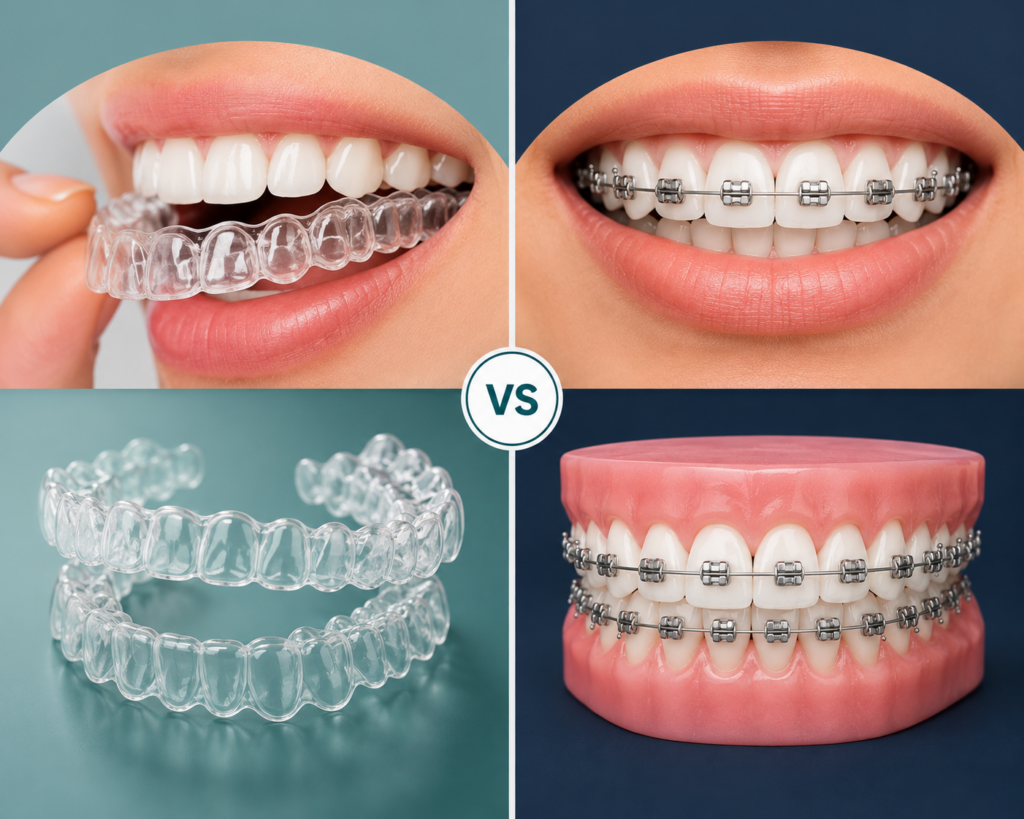
Invisalign uses clear, custom-molded aligners that are nearly invisible, making them ideal for teens and adults in professional or social environments across Hyderabad and Telangana who want discreet treatment. Metal braces, while more noticeable, now come in smaller, more comfortable designs, though the wires and brackets remain visibly metallic.
Comfort:
Invisalign aligners are smooth and removable, reducing irritation to cheeks and gums. Metal braces may cause initial discomfort and require wax to cover sharp edges, especially after adjustments.
Treatment Duration:
Both options typically range from 12 to 24 months, depending on case complexity. Invisalign can sometimes deliver results faster for mild to moderate alignment issues, especially with consistent wear.
Maintenance:
With Invisalign, you remove aligners to eat and brush, allowing for normal oral hygiene. Metal braces require special brushing tools and floss threaders to clean around brackets and prevent plaque buildup.
For optimal results, follow your provider’s wear schedule—22 hours per day for Invisalign—and attend regular check-ups to stay on track.
Who Benefits Most from Invisalign Treatment?
Invisalign has transformed orthodontic care for teens and adults seeking a discreet, comfortable alternative to traditional braces. Ideal candidates typically have mild to moderate dental misalignments, including crowded teeth, gaps between teeth, overbites, underbites, and crossbites.
One of Invisalign’s biggest advantages is flexibility—since the trays are removable, patients can eat freely and maintain regular brushing and flossing routines, supporting better oral health during treatment. However, success depends heavily on discipline; aligners must be worn 20–22 hours per day for optimal results.
Invisalign may not be suitable for severe malocclusions or complex jaw alignment issues that require more forceful correction.
Common Concerns About Invisalign: Your Questions Answered
How much does Invisalign typically cost?
Invisalign treatment costs vary depending on case complexity, number of aligners, and treatment duration. It could typically range from 100,000/- to 250,000/- . Factors such as the need for refinements or attachments may influence the final investment. At Cognident, we offer flexible payment plans to make treatment accessible.
How long does Invisalign treatment take?
Most adults complete treatment in 12 to 18 months, though simpler cases may take as little as 6 months. Success depends on wearing aligners 20–22 hours per day and following your provider’s schedule. Consistency ensures your teeth move according to plan and helps avoid extended timelines.
How do I clean and care for my aligners?
Rinse aligners each time you remove them. Clean them daily with a soft toothbrush and lukewarm water—avoid hot water, which can warp them. For deeper cleaning, use dentist-recommended aligner solutions. Always store them in their case when not in use to prevent loss or damage.
Can teenagers use Invisalign effectively?
Yes, there’s an Invisalign system specifically designed for growing smiles. Teen versions include compliance indicators and eruption tabs to accommodate developing teeth. Success relies on responsible wear, so parental support and regular check-ups are important.
Is Invisalign suitable for older adults?
Absolutely. Age isn’t a barrier—many patients in their 40s, 50s, and beyond choose clear aligners for discreet correction. As long as gum and bone health are stable, Invisalign can address crowding, spacing, or minor bite issues common in adults.
Do I need to avoid certain foods with Invisalign?
Not directly—since aligners are removable, you can eat what you like. However, always brush before reinserting them to prevent staining or bacterial buildup. This simple step maintains oral health and keeps aligners clear.
Your Smile, Your Health, Your Future
Invisalign and clear aligner therapy offer more than just a discreet path to straighter teeth—they represent a meaningful investment in long-term oral health. By correcting misalignment, these treatments help reduce uneven wear, improve bite function, and make daily cleaning more effective, ultimately lowering the risk of gum disease and tooth decay.
To get started, take these practical steps:
- Schedule a comprehensive evaluation at Cognident Dental clinic to determine if aligners are right for your case
- Ask about treatment timelines, retainer plans, and oral hygiene practices to maintain results
- Follow your provider’s instructions closely, including wearing aligners as prescribed and attending check-ins
Choosing Invisalign isn’t just about aesthetics—it’s about creating a healthier, more functional smile that lasts. With the right guidance and commitment, you’re not just aligning teeth, you’re building a foundation for lifelong oral wellness. Take the next step today—your confident, healthier smile is within reach.