Beyond the Surface: Why Not All Dental Implants Are Created Equal
When it comes to replacing missing teeth, dental implants have revolutionized oral care by offering a durable, natural-feeling solution that goes beyond temporary fixes. Yet, a common misconception among patients—especially those exploring options in Hyderabad and across Telangana—is that all dental implants are identical. This couldn’t be further from the truth. From implant materials and design to placement techniques and prosthetic attachments, significant variations exist that directly impact success rates, comfort, and long-term functionality.
Implants may differ in thread pattern, surface texture, and composition, all engineered to optimize osseointegration—the process where the implant fuses with the jawbone. Some are better suited for patients with limited bone density, while others offer faster recovery times. Additionally, the abutment and crown selection play a crucial role in aesthetics and bite alignment, making customization essential.
In this guide, you’ll discover the key differences between implant types, understand how regional factors like diet and water quality in Hyderabad can influence outcomes, and learn what questions to ask when evaluating your options. You’ll also gain practical insights into aftercare, longevity, and how to choose a solution tailored to your unique anatomy and lifestyle.
Understanding the Different Types of Dental Implants: Which Option is Right for You?
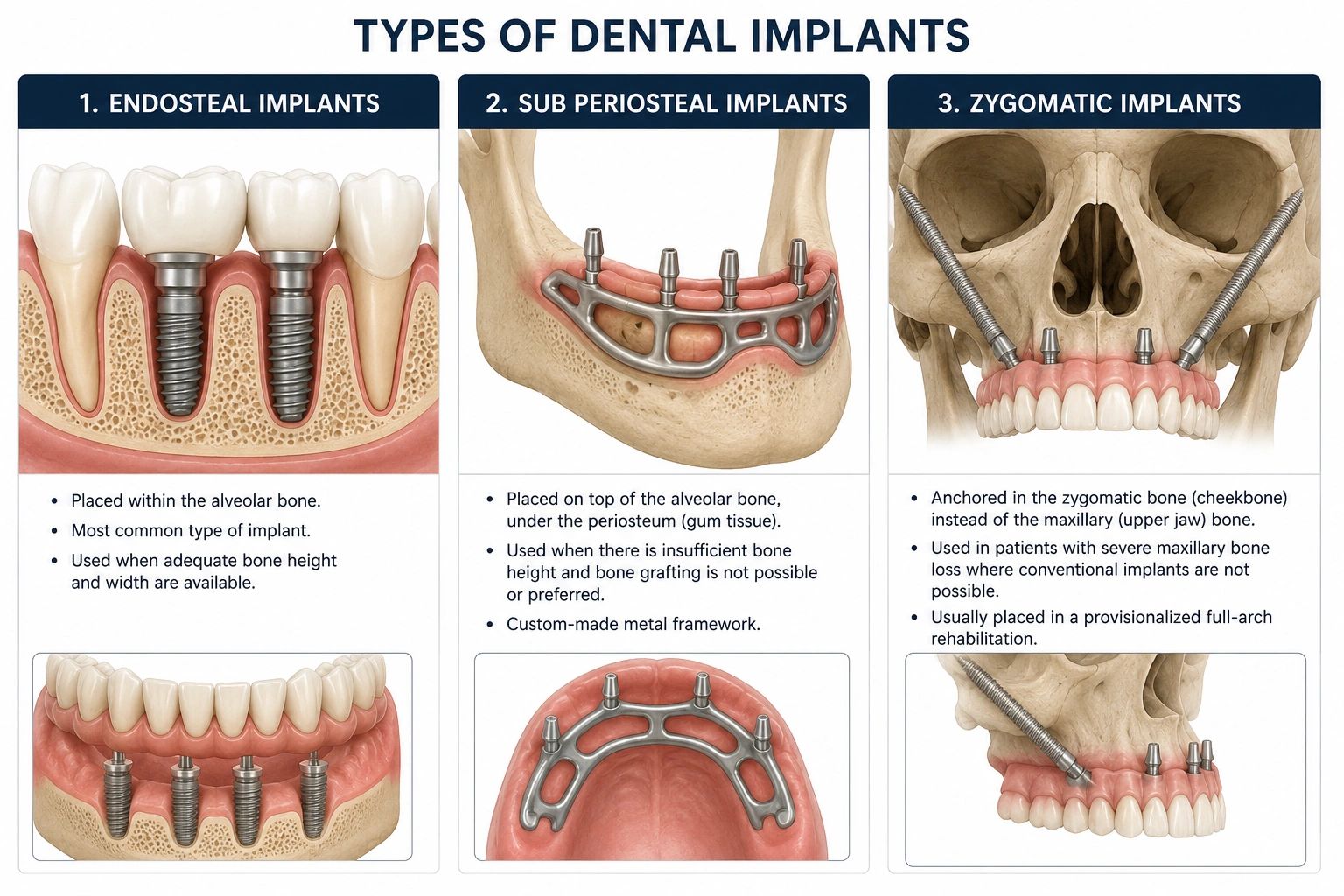
When it comes to replacing missing teeth, not all dental implants are created equal—your ideal solution depends on jawbone health, the number of missing teeth, and overall oral anatomy. For patients in Hyderabad and across Telangana, understanding the three primary types of implants helps in making informed decisions aligned with long-term functionality and comfort.
Endosteal implants are the most common type, ideal for patients with sufficient jawbone density. These titanium posts are surgically placed directly into the bone, acting as artificial tooth roots. After osseointegration—typically 3 to 6 months—they support crowns, bridges, or dentures. They’re highly successful for single or multiple tooth replacements.
Subperiosteal implants are designed for those with limited jawbone height who may not opt for bone grafting. Instead of being embedded in the bone, a metal framework sits just above the jaw but beneath the gum tissue, with posts extending to hold the restoration. This option provides stability when bone volume is a concern.
Zygomatic implants are specialized fixtures anchored into the zygomatic (cheek) bone rather than the jaw, used in cases of severe upper jawbone loss. Though more complex, they eliminate the need for extensive bone augmentation and allow for full-arch restoration in a single procedure.
Choosing the right implant begins with a comprehensive assessment, including 3D imaging, to match your anatomy with the most effective solution.
Not All Implants Are Created Equal: Understanding Material, Design, and Performance Differences
When exploring best implants in Hyderabad, it’s important to recognize that not all implants offer the same level of durability, compatibility, or long-term success. Significant variations exist in materials, structural design, and manufacturing quality—all of which directly impact how well an implant integrates with your jawbone and withstands daily use.
Material Composition:
Most implants are made from medical-grade titanium, prized for its strength and biocompatibility. However, a newer alternative—zirconia—offers a metal-free option with excellent aesthetic properties, making it ideal for patients with metal sensitivities or high cosmetic demands, especially in visible front teeth areas.
Implant Design Features:
- Thread Pattern: Influences stability during placement and osseointegration speed—aggressive threads may suit softer bone, while finer threads offer precision in denser bone.
- Surface Texture: Micro-roughened or sandblasted surfaces enhance bone bonding, improving long-term fixation.
- Tapered vs. Cylindrical: Tapered designs mimic natural tooth roots and provide immediate stability, while cylindrical types distribute force evenly in dense bone.
Surface Coating: The Hidden Factor Most Patients Don’t Know
This is where quality really differs.
Implants are not just smooth screws—they have special surface treatments that help bone attach faster and stronger.
Types of Surface Treatments
- Roughened surfaces → Better bone bonding
- Sandblasted & acid-etched (SLA) → Faster healing
- Advanced bioactive coatings → Improved long-term stability
👉 Why this matters:
A good surface coating =
✔ Faster healing
✔ Stronger integration
✔ Lower failure risk
Brand Quality and Manufacturing Standards:
While multiple brands serve the Indian market, implants from established manufacturers often adhere to stricter ISO and CE standards, ensuring consistent dimensions, fit, and corrosion resistance. Low-cost alternatives may cut corners in sterilization, packaging, or material purity, increasing the risk of complications.
For patients in Telangana, choosing an implant that aligns with your bone density, bite force, and dietary habits—like chewing dense, traditional foods—is essential. Always discuss material and design options with your implantologist to ensure optimal performance and longevity.
-75b9ff7.png)
What Really Determines Dental Implant Success?
Achieving a successful dental implant outcome isn’t just about the procedure—it’s influenced by a combination of biological, technical, and lifestyle factors. Understanding these elements helps patients in Hyderabad and across Telangana make informed decisions and take proactive steps toward long-term success.
Strong jawbone density is one of the most critical prerequisites. The implant relies on osseointegration—the fusion of titanium with natural bone. Patients with low bone volume may require a bone graft or sinus lift before implant placement to ensure stability. Early intervention after tooth loss can help preserve existing bone structure.
Oral health status also plays a major role. Active gum disease or untreated decay increases the risk of implant failure. A healthy oral environment, maintained through consistent brushing, flossing, and professional cleanings, supports healing and integration.
Equally important is the experience and precision of the dental provider. Skilled implantologists use 3D imaging to plan exact implant angles and depths, minimizing complications and maximizing functional and aesthetic results.
Lifestyle habits like smoking or systemic conditions like uncontrolled diabetes can hinder healing. Patients who commit to pre- and post-op care instructions, including dietary modifications and follow-up visits, dramatically improve their chances of long-term success.
Dental Implants: Busting Myths on Longevity, Cost, and Value
Do all dental implants last the same amount of time?
No—while dental implants in Hyderabad are designed to be long-term solutions, their lifespan depends on multiple factors. High-quality implants made from medical-grade titanium typically integrate better with jawbone tissue through osseointegration. With proper oral hygiene, non-smoking habits, and routine checkups, many implants last 20 years or more—often considered lifelong. However, lifestyle factors like teeth grinding or uncontrolled diabetes can impact longevity.
Why do implant costs vary so much?
Cost differences stem from materials, implant brand, surface coatings of implant, surgical complexity, and whether bone grafting is needed. In Telangana, clinics may offer budget implants, but these aren’t always backed by strong clinical data. Higher-priced options often include advanced diagnostics like 3D imaging and premium abutments or crowns for better fit and aesthetics.
Are All Implant Brands Equal?
No. There are
- Premium international brands (extensive research, long-term data)
- Budget implants (limited evidence, variable quality)
Are cheaper dental implants a good value?
Not always. While affordability matters, low-cost implants may use inferior materials or less precise placement techniques. This can lead to complications like implant failure or gum recession—resulting in costlier repairs. Always ask about the implant brand, warranty, and the dentist’s surgical experience.
Does location impact implant quality?
Yes—dentists in Hyderabad with specialized implantology training often use guided surgery protocols, improving accuracy. Urban clinics may offer better access to CBCT imaging and immediate-load options, enhancing outcomes.
How can I ensure my implant lasts?
- Maintain daily brushing and flossing
- Avoid tobacco use
- Attend biannual dental cleanings
- Use night guards if you grind teeth
Choose care based on expertise, not just price.
What Should Patients Focus On?
Instead of asking only “What is the cost?”, ask:
- What implant system is being used?
- Is it clinically proven?
- What is the long-term success rate?
- Who is placing the implant?
Making the Right Choice for Your Smile and Your Health
Choosing dental implants is more than just filling a gap—it’s an investment in long-term oral function, confidence, and overall well-being. While all implants serve the same basic purpose—replacing missing tooth roots and crowns—they are not one-size-fits-all. Variations in materials, implant design, placement techniques, and restoration methods mean outcomes can differ significantly based on individual needs. For patients looking for best quality implants in Madhapur, Hitech city, Hyderabad and across Telangana, where diet and lifestyle play a crucial role in dental health, selecting the right implant solution requires careful evaluation of jawbone quality, bite dynamics, and personal health factors.
Key considerations include whether you’re a candidate for immediate-load implants or require preliminary procedures like bone grafting, as well as the type of crown material best suited to your chewing habits. Your treatment plan should be built on accurate diagnostics, including 3D imaging, and guided by clinical expertise. Maintenance is equally vital—consistent brushing, flossing, and routine dental visits help ensure longevity.
If you’re ready to move forward, start by consulting with an experienced/ top implant specialist who can assess your oral health and create a customized plan. Taking this proactive step ensures you achieve a stable, natural-looking smile built to last.