Healthy gums are essential for maintaining strong teeth and overall oral health. Advanced gum disease can lead to inflammation, bleeding, gum recession, deep periodontal pockets, and gradual loss of supporting bone.
At Cognident Psychiatry and Dental Clinic in Madhapur, we provide personalised periodontal care, including LANAP when clinically appropriate.
The procedure uses specialised laser technology to target diseased tissue and bacterial deposits while helping preserve healthy tissues around the teeth.
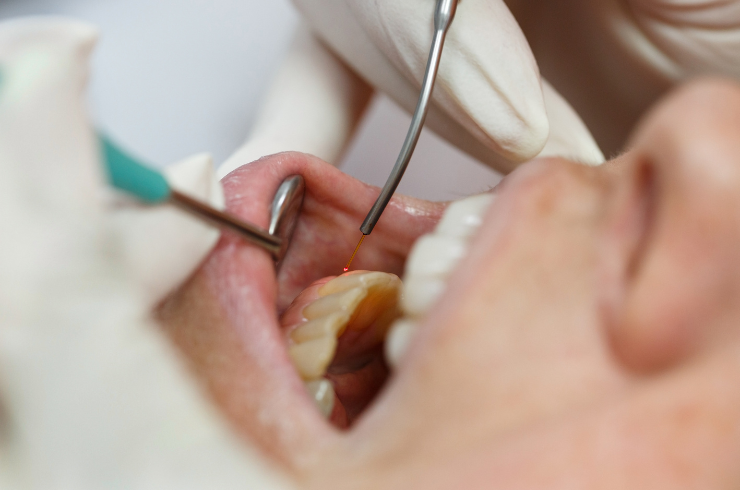
LANAP is a minimally invasive laser-assisted periodontal approach designed to manage selected cases of gum disease while supporting healing and periodontal tissue preservation.
LANAP, or Laser-Assisted New Attachment Procedure, is a laser-assisted periodontal procedure used as part of gum disease management.
A specialised dental laser is used to target diseased gum tissue and bacteria associated with periodontal infection while helping preserve healthy surrounding tissues.
LANAP may support periodontal care by targeting diseased tissue and bacterial contamination in affected gum areas.
Specialised laser technology helps access periodontal pockets and manage diseased tissues with controlled precision.
The approach focuses on treating affected areas while helping preserve healthy gum tissue wherever clinically possible.
A detailed periodontal examination is required before LANAP to determine whether the procedure is appropriate for your gum condition.
LANAP may be considered for selected patients with periodontal disease when laser-assisted treatment is clinically appropriate.
Early periodontal assessment can help identify gum disease before it causes more extensive damage to the tissues and bone supporting the teeth.
Your gums, periodontal pockets, teeth, bone support, and overall oral health are assessed to determine the severity of gum disease and the most appropriate care approach.
Specialised laser technology is used to target diseased gum tissue and bacteria within affected periodontal areas while helping preserve healthy surrounding tissues.
Affected areas are carefully cleaned to remove bacterial deposits and disease-associated material from around the teeth and beneath the gum line.
Regular follow-up helps assess gum healing, periodontal pocket changes, oral hygiene, and the overall response to treatment.
LANAP is designed to support periodontal health by addressing diseased tissues and bacterial contamination associated with gum disease.
LANAP is not appropriate for every patient or every stage of gum disease. A comprehensive periodontal assessment is important before treatment planning.
At Cognident Psychiatry and Dental Clinic, we provide personalised periodontal care based on the condition of your gums, teeth, supporting tissues, and overall oral health.
Our approach begins with a detailed periodontal assessment to understand the extent of gum disease and identify factors contributing to periodontal problems.
When LANAP is clinically appropriate, treatment is carefully planned according to the affected areas and individual periodontal needs.
We also emphasise professional periodontal maintenance and daily oral hygiene following treatment. Regular follow-up allows our dental team to monitor gum health, evaluate healing, and recommend additional care when required.
Our goal is to help patients manage periodontal disease, protect the supporting tissues around their teeth, and maintain healthier gums through personalised and evidence-based periodontal care.
Find answers to commonly asked questions about LANAP, laser gum treatment, periodontal disease, recovery, and gum health.
LANAP stands for Laser-Assisted New Attachment Procedure. It is a laser-assisted periodontal procedure used as part of the management of certain forms of gum disease.
No. LANAP is not suitable for every patient or every periodontal condition. A detailed examination is required to determine whether laser-assisted periodontal treatment is appropriate.
LANAP is performed using local anaesthesia to maintain patient comfort during the procedure. Some temporary tenderness or sensitivity may occur after treatment.
Treatment time varies depending on the severity of periodontal disease, the number of affected areas, and the individual treatment plan. Your dentist will explain the expected treatment schedule.
LANAP uses specialised laser technology as part of periodontal treatment to target diseased tissue and bacteria. The appropriate approach depends on your periodontal condition and clinical requirements.
Recovery varies between individuals and depends on the extent of periodontal disease and treatment performed. Your dental team will provide personalised post-treatment and oral hygiene instructions.
LANAP can help manage periodontal disease, but long-term gum health also depends on effective daily oral hygiene, professional periodontal maintenance, regular dental visits, and management of risk factors.