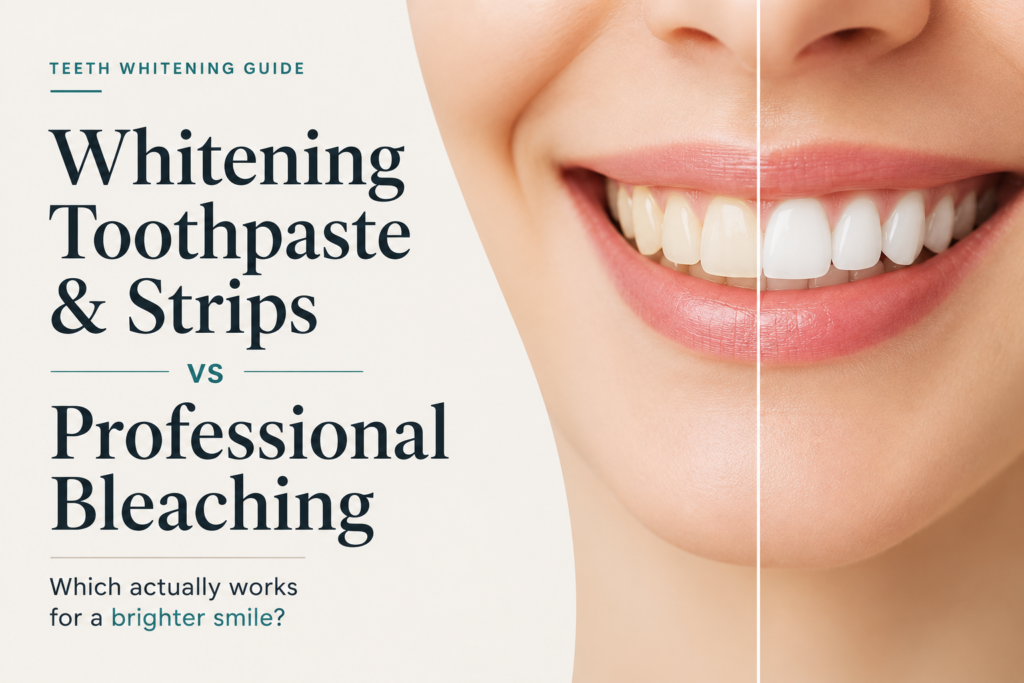
If you are searching for how to remove yellow stains from teeth, best teeth whitening treatment, whitening toothpaste vs professional teeth whitening, or are whitening strips safe, you have probably wondered whether you really need professional bleaching.
After all, whitening toothpastes and whitening strips are much easier to buy and often cost less.
But do they give the same results as professional teeth whitening?
Usually, no.
Whitening toothpaste, whitening strips and professional bleaching work differently. The right option depends on whether you have surface stains, naturally yellow teeth or deeper tooth discolouration.
This guide explains the difference so you can choose the right teeth whitening treatment for your smile.
Whitening Toothpaste vs Whitening Strips vs Professional Bleaching
| Treatment | How it works | Best for | Expected results |
|---|---|---|---|
| Whitening toothpaste | Helps remove surface stains | Mild external stains | Usually subtle |
| Whitening strips | Uses a peroxide-based whitening agent | Mild to moderate tooth discolouration | Can lighten natural teeth |
| Professional bleaching | Dentist-supervised bleaching protocol | Suitable patients seeking more predictable whitening | Greater control and professional assessment |
The biggest difference is that not all yellow teeth are yellow for the same reason.
That is why the same whitening product may work well for one person and produce disappointing results for another.
Do Whitening Toothpastes Actually Whiten Teeth?
Whitening toothpaste can help improve the appearance of teeth by removing or reducing certain surface stains.
These stains may be caused by:
- Tea
- Coffee
- Tobacco
- Certain foods and drinks
- Accumulation of external stains over time
However, whitening toothpaste generally does not produce the same type or degree of whitening as professional bleaching.
If your teeth are naturally darker or yellow because of the underlying colour of the tooth structure, simply brushing with whitening toothpaste may not produce a significant colour change.
Whitening Toothpaste May Be Helpful For:
- Mild surface stains
- Maintaining a professionally whitened smile
- Patients looking for gradual improvement in surface brightness
Whitening Toothpaste May Not Be Enough For:
- Naturally yellow teeth
- Deep or internal discolouration
- A significantly darker tooth
- Uneven tooth colour
- Patients expecting multiple shades of whitening
Can Whitening Toothpaste Damage Your Teeth?
Not all whitening toothpastes work in the same way.
Some products primarily focus on removing external stains, while others may contain whitening ingredients.
Overuse of highly abrasive products or aggressive brushing can potentially contribute to tooth wear or sensitivity.
If you already have:
- Sensitive teeth
- Gum recession
- Exposed root surfaces
- Worn enamel
it is better to discuss your whitening options with a dentist instead of repeatedly trying stronger whitening products.
Do Whitening Strips Actually Work?
Whitening strips can lighten the colour of natural teeth because many strips contain a bleaching agent.
They are designed to be placed directly over the visible surfaces of the teeth for a specified period.
For suitable users, whitening strips may produce more noticeable results than whitening toothpaste.
However, there are limitations.
The strips are generally designed for a standard application and may not perfectly adapt to every person’s teeth.
This can result in:
- Uneven whitening
- Missed areas
- Gum irritation
- Tooth sensitivity
- Difficulty whitening teeth that are rotated or irregularly aligned
The results also depend on the type and concentration of the whitening ingredient, the cause of discolouration and how consistently the product is used.
Are Whitening Strips Safe?
Whitening strips may be suitable for some people when used exactly as directed.
However, they are not the right choice for everyone.
You should be cautious about using whitening strips if you have:
- Tooth decay
- Cavities
- Cracked teeth
- Significant sensitivity
- Gum problems
- Exposed roots
- Leaking fillings
- Unexplained darkening of a single tooth
A whitening product cannot diagnose the reason behind tooth discolouration.
For example, if one tooth has suddenly become darker, applying whitening strips may delay diagnosis of an underlying dental problem.
Why Do Whitening Strips Cause Tooth Sensitivity?
Tooth sensitivity is one of the most common concerns associated with whitening.
Some people may experience temporary sensitivity to:
- Cold drinks
- Air
- Sweet foods
- Brushing
The intensity varies from person to person.
Factors that may influence sensitivity include:
- Existing tooth sensitivity
- Whitening agent used
- Duration and frequency of use
- Gum recession
- Exposed dentin
- Cracks or other dental problems
If sensitivity is severe or persistent, it is important to stop self-treatment and consult a dentist.
What Is Professional Teeth Bleaching?
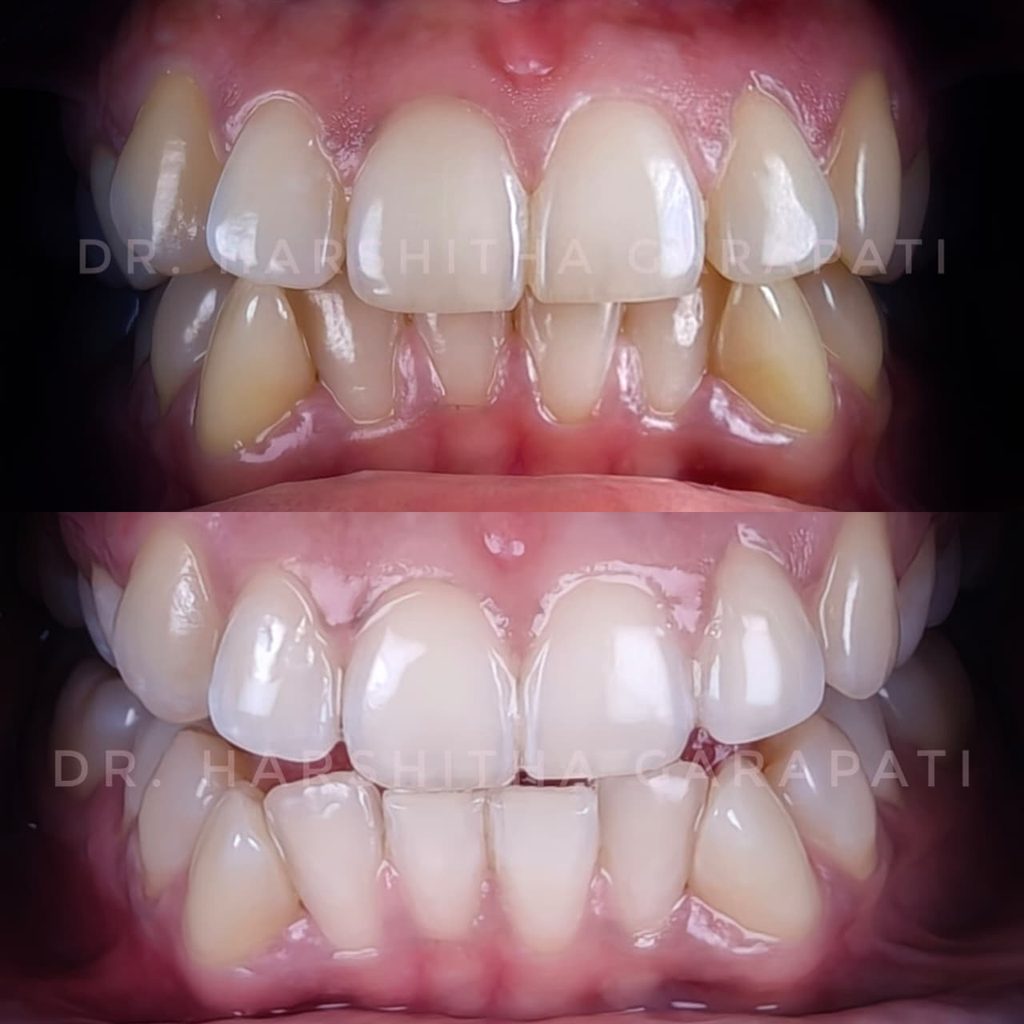
Professional teeth bleaching is a dentist-supervised method used to lighten the colour of natural teeth.
The dentist first evaluates your teeth and gums to determine whether whitening is appropriate.
Depending on your needs, professional whitening may involve:
- In-clinic bleaching
- Customised take-home trays
- A combination of in-clinic and take-home treatment
The advantage is not simply that the whitening agent is stronger.
The important advantage is that the treatment can be planned according to your individual teeth, sensitivity and type of discolouration.
Whitening Toothpaste vs Whitening Strips vs Professional Bleaching
1. Effectiveness
Whitening Toothpaste
Best suited for reducing some external stains.
Results are generally subtle, particularly if the natural tooth colour itself is yellow.
Whitening Strips
Can lighten natural teeth and may provide more noticeable results than whitening toothpaste for suitable users.
However, the result may vary depending on how well the strips fit your teeth and the type of discolouration.
Professional Bleaching
Allows the whitening approach to be selected based on your teeth and dental condition.
This may provide a more controlled and predictable treatment approach for suitable patients.
2. Safety and Dental Assessment
With whitening toothpaste and strips, you are usually choosing the treatment without a dental examination.
Professional bleaching starts with assessing whether you have problems such as:
- Tooth decay
- Gum disease
- Cracked teeth
- Existing restorations
- Significant sensitivity
- Internal tooth discolouration
This is particularly important because not every dark or yellow tooth needs whitening.
3. Tooth Sensitivity
Sensitivity can occur with different whitening methods.
With professional bleaching, the dentist can evaluate your existing sensitivity and modify the treatment approach when appropriate.
If you already have sensitive teeth, repeatedly experimenting with different whitening products may not be the best solution.
4. Evenness of Whitening
Whitening toothpaste affects the surfaces reached during brushing.
Whitening strips may not adapt perfectly around every tooth, especially if teeth are crowded, rotated or irregular.
Professional treatment can be planned around your individual smile and tooth alignment.
5. Convenience
The easiest option because is tooth paste incorporated into your regular brushing routine while strips are Convenient to use at home but require consistent application
Professional teeth whitening Requires a dental consultation and treatment plan, but may be preferable if you want a more personalised approach.
When Should You Choose Professional Bleaching?
Professional bleaching may be worth considering if:
- You have naturally yellow teeth
- Whitening toothpaste has not given you the result you want
- You want to improve the colour of multiple teeth
- You have a special event coming up
- You are concerned about tooth sensitivity
- You have uneven tooth colour
- You want to know whether whitening is suitable before starting treatment
A dental examination is especially important if one tooth is significantly darker than the others.
How Much Does Professional Teeth Whitening Cost in Hyderabad?
The cost of professional teeth whitening in Hyderabad can vary depending on:
- The whitening technique used
- Whether treatment is performed in the clinic or at home
- The number of sessions required
- Your existing dental condition
- Whether additional dental treatment is required first
It can range between 5000-15000 rupees
Looking for Professional Teeth Whitening in Madhapur, Hyderabad?
Under the leadership of Dr. Harshitha Garapati, COGNIDENT – Psychiatry | Dental Clinic, Madhapur,offers personalised whitening solutions — not one-size-fits-all protocols. Every treatment is tailored to your teeth, your lifestyle and your whitening goals. Your teeth, gums and existing dental restorations can be evaluated before recommending a whitening approach.
Whether your concern is yellow teeth, tea and coffee stains, uneven tooth color or a dull-looking smile, the first step is understanding the cause.
Book a consultation at COGNIDENT, Madhapur, Hyderabad, to discuss professional teeth whitening and find the right approach for your smile.
Frequently Asked Questions
Does whitening toothpaste really work?
Whitening toothpaste can help reduce certain surface stains, but results are generally limited compared with bleaching treatments. It may not significantly change the natural colour of your teeth.
Are whitening strips better than whitening toothpaste?
Whitening strips can provide more noticeable whitening because they use a bleaching agent. However, they may not be suitable for everyone and can cause sensitivity or gum irritation in some people.
Is professional teeth bleaching better than whitening strips?
Professional bleaching allows the dentist to assess your teeth and recommend a whitening approach based on your dental condition, sensitivity and type of discolouration.
Can I use whitening strips if I have sensitive teeth?
It depends on the cause and severity of your sensitivity. If you already experience significant sensitivity, it is best to speak with a dentist before starting whitening.
How can I permanently remove yellow stains from my teeth?
No whitening result is necessarily permanent. The best treatment depends on whether the discolouration is caused by surface staining, natural tooth colour or an internal dental problem.
Can yellow teeth become white again?
Many natural teeth can become lighter with appropriate whitening treatment, but the final result varies depending on the original tooth shade and cause of discoloration.
How long does professional teeth whitening last?
The duration varies depending on your diet, oral hygiene, tobacco use, natural tooth characteristics and maintenance. Professional Chemical Bleaching lasts about 8-10 months.