Crooked, crowded, or unevenly spaced teeth can affect more than the appearance of your smile. They may make brushing difficult, affect your bite, cause uneven tooth wear, and contribute to jaw discomfort.
At Cognident Psychiatry and Dental Clinic in Madhapur, we provide personalised braces treatment for children, teenagers, and adults.
Our orthodontic care focuses on gradually moving teeth into healthier positions, improving smile alignment, bite balance, and long-term oral function.
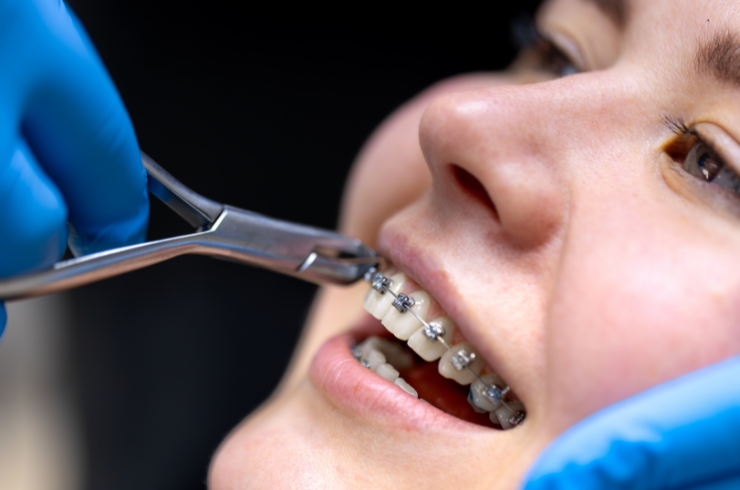
Depending on your dental condition, age, lifestyle, and aesthetic preferences, our dentist may recommend metal braces, ceramic braces, self-ligating braces, or another suitable orthodontic option.
Every treatment plan is carefully designed according to tooth position, jaw relationship, facial profile, oral health, and individual goals.
Braces treatment is an orthodontic procedure used to straighten teeth and correct bite problems. Brackets are attached to teeth and connected with specialised wires that apply gentle, controlled pressure over time.
As treatment progresses, teeth gradually move into planned positions. Regular adjustments help guide movement and ensure proper bite development.
Brackets are attached to teeth and connected with wires that apply controlled pressure for gradual tooth movement.
Regular adjustments guide teeth into healthier positions and improve overall smile alignment.
Braces help correct bite problems such as overbite, underbite, crossbite, and open bite.
Braces may be used to correct crowded teeth, gaps, protruding teeth, rotated teeth, and various orthodontic alignment concerns.
You may benefit from braces treatment if you have:
The dentist examines your teeth, bite, jaw relationship, and facial profile to create an accurate orthodontic treatment plan.
Brackets and wires are carefully placed on teeth to begin controlled movement toward the planned positions.
After braces removal, customised retainers help maintain the corrected tooth positions.
The appropriate type of braces depends on orthodontic needs, age, lifestyle, and aesthetic preferences.
Metal braces are strong and effective for a wide range of alignment problems. Ceramic braces use tooth-coloured brackets and provide a less noticeable appearance. Your dentist will explain the advantages and limitations of each option before treatment.
Braces treatment improves both the appearance and function of your teeth by creating better alignment and bite balance.
The success of orthodontic treatment depends on regular appointments, proper oral hygiene, following dietary instructions, and wearing retainers as advised.
At Cognident Psychiatry and Dental Clinic, orthodontic treatment is planned with attention to dental health, facial appearance, bite function, and patient comfort.
Our dental team carefully monitors tooth movement throughout treatment and makes adjustments based on your individual progress.
At Cognident, our goal is to create a straighter smile while improving dental function, bite balance, and long-term oral health.
Braces may be recommended during childhood, teenage years, or adulthood. The ideal starting time depends on tooth development, jaw growth, and the type of alignment problem.
You may experience mild pressure or tenderness for a few days after braces are placed or adjusted. This is temporary and usually improves as the mouth adapts.
Treatment duration depends on the severity of alignment problems, type of braces, age, oral health, and appointment consistency. Many treatments take approximately 12 to 24 months, while some cases may require less or more time.
Hard, sticky, and chewy foods may damage brackets or wires. Patients are generally advised to avoid hard candies, chewing gum, popcorn kernels, ice, and biting directly into very hard foods.
Yes. Retainers help maintain corrected tooth positions after braces are removed. Without retention, teeth may gradually shift back. The type and duration of retainer use will be recommended according to your case.
